
01 / FINE DETAIL
Small details. Complex relationships.
Limited model capacity can affect fine icon detail and complex spatial relationships.
OPEN MODELS · VISUAL CODE GENERATION
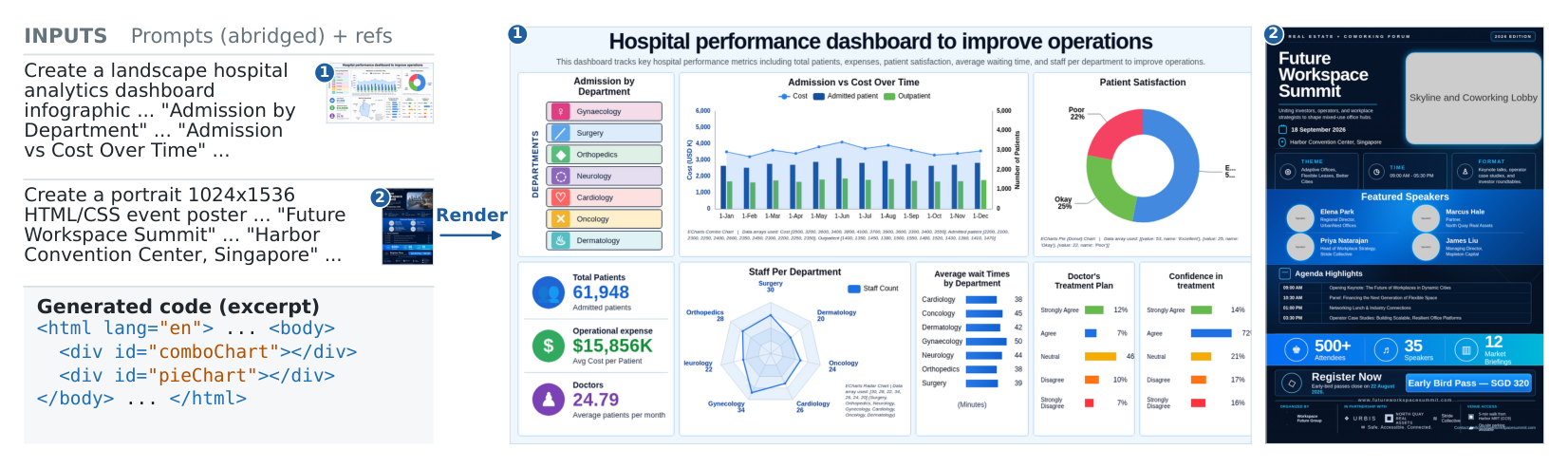
AesCode is a code generation model that learns visual design from references produced by image generators.
With this aesthetic guidance, it creates information-rich posters, slides, dashboards, and webpages as editable HTML & CSS.
THE SHORT FILM
The examples, the idea, and what we learned.
01 / THE WORK
Slides, dashboards, websites & posters.
A gallery of editable visual artifacts.
Why the gray boxes? AesCode generates editable HTML and CSS, so photos and complex illustrations are represented by semantic placeholders rather than requiring the code model to synthesize them. Their intended role and layout stay in place; you can add the images and refine the design in later edits.
02 / INSIDE AESCODE
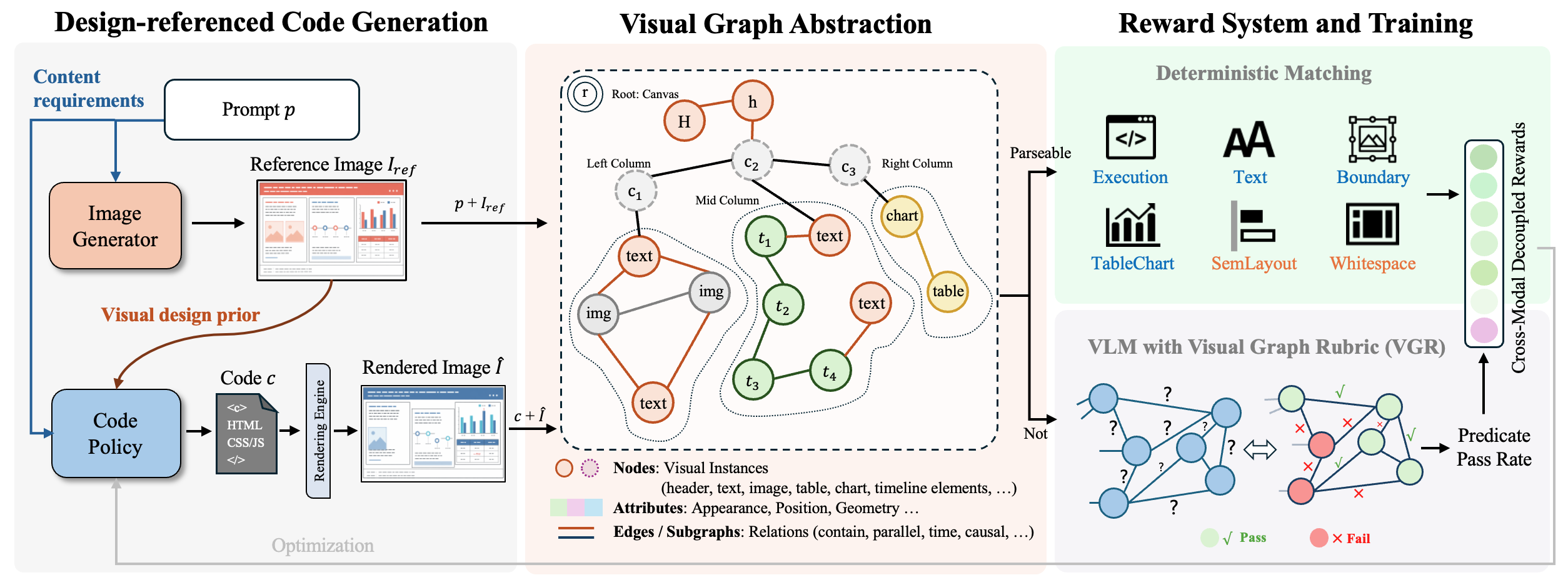
The prompt defines what to say.
The reference suggests how it could look.
03 / THE EVIDENCE
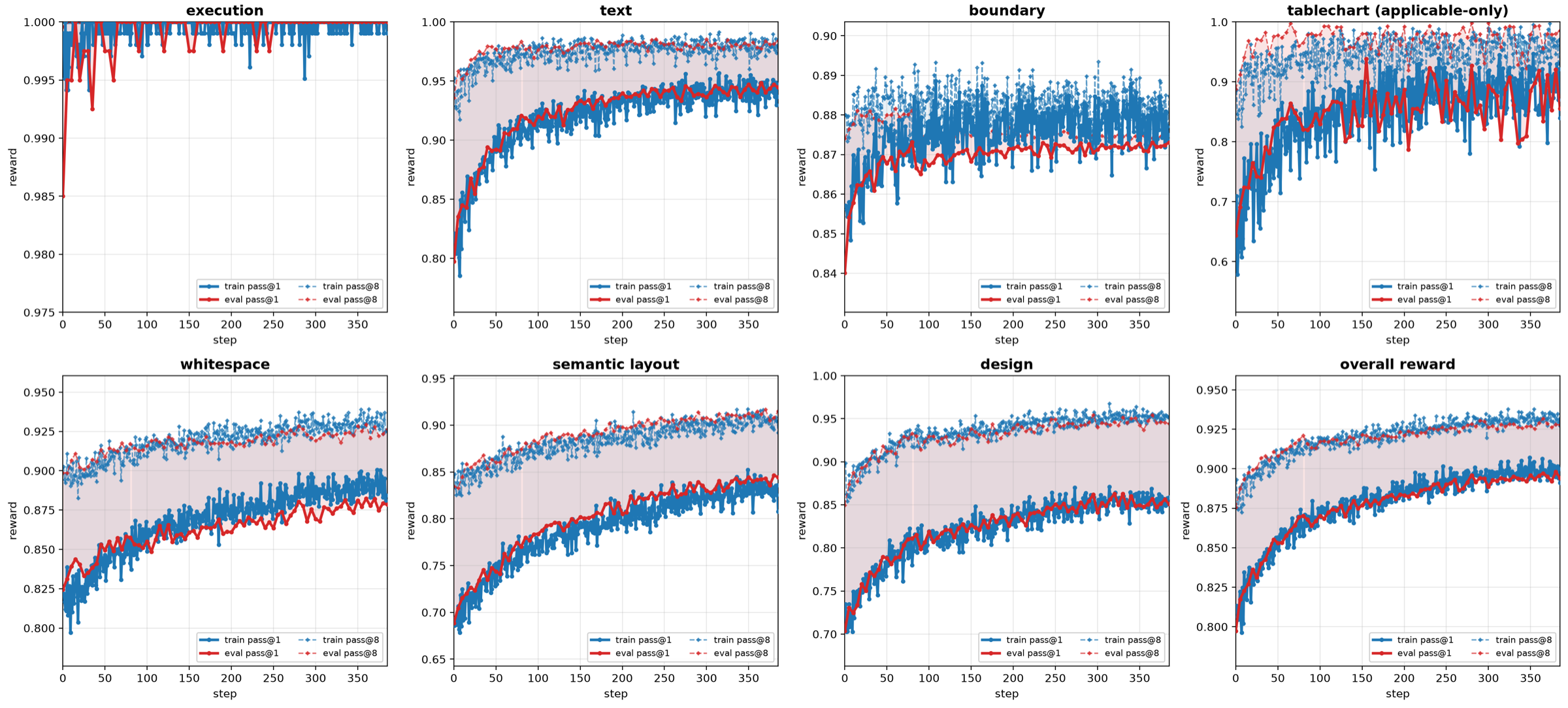
Competitive visual quality, with strong programmatic correctness. Measured on 300 infographic prompts, averaged over three generations per prompt, without selection.
Same reference-image setting. Full evaluations below.
AesCode Baselines All shown with reference images
04 / UP CLOSE
Content. Boundaries. Visual hierarchy.
Compare the details side by side.
Red outlines mark the source-documented issue regions.
A NOTE ON LIMITS
Limited model capacity can affect fine icon detail and complex spatial relationships.
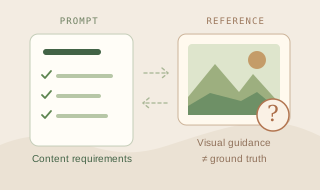
Reference images can contain hallucinated content. The model must learn their visual cues without copying their mistakes.
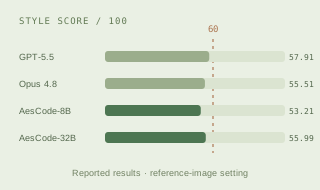
Style remains a challenge across models: every evaluated model scores below 60% on the Style dimension.
MADE TO BE EXPLORED. BUILT TO BE EDITED.