ai-agents-for-beginners

(इस पाठ का वीडियो देखने के लिए ऊपर चित्र पर क्लिक करें)
एआई एजेंट्स में मेटाकॉग्निशन
परिचय
एआई एजेंट्स में मेटाकॉग्निशन पर इस पाठ में आपका स्वागत है! यह अध्याय उन शुरुआती लोगों के लिए डिज़ाइन किया गया है जो यह जानने के लिए उत्सुक हैं कि एआई एजेंट अपने स्वयं के सोचने की प्रक्रियाओं के बारे में कैसे सोच सकते हैं। इस पाठ के अंत तक, आप मुख्य अवधारणाओं को समझेंगे और मेटाकॉग्निशन को एआई एजेंट डिज़ाइन में लागू करने के लिए व्यावहारिक उदाहरणों से लैस होंगे।
सीखने के लक्ष्य
इस पाठ को पूरा करने के बाद, आप सक्षम होंगे:
- एजेंट परिभाषाओं में तर्क लूप्स के प्रभाव को समझना।
- स्व-सही करने वाले एजेंट्स की मदद के लिए योजना और मूल्यांकन तकनीकों का उपयोग करना।
- ऐसे एजेंट बनाना जो कार्यों को पूरा करने के लिए कोड को संशोधित कर सकें।
मेटाकॉग्निशन का परिचय
मेटाकॉग्निशन उच्च-स्तरीय संज्ञानात्मक प्रक्रियाओं को संदर्भित करता है जो अपनी सोच के बारे में सोचने में शामिल हैं। एआई एजेंट्स के लिए, इसका अर्थ है कि वे आत्म-जागरूकता और पिछले अनुभवों के आधार पर अपने कार्यों का मूल्यांकन और समायोजन कर सकें। मेटाकॉग्निशन, या “सोच के बारे में सोच,” एजेंटिक एआई प्रणालियों के विकास में एक महत्वपूर्ण अवधारणा है। इसमें एआई सिस्टम अपने आंतरिक प्रक्रियाओं के प्रति जागरूक होते हैं और अपनी व्यवहार को मॉनिटर, नियंत्रित और अनुकूलित करने में सक्षम होते हैं। ठीक उसी तरह जैसे हम किसी कमरे की परिस्थिति पढ़ते हैं या किसी समस्या को देखते हैं। यह आत्म-जागरूकता एआई सिस्टम को बेहतर निर्णय लेने, त्रुटियाँ पहचानने और समय के साथ प्रदर्शन सुधारने में मदद कर सकती है — यह फिर से ट्यूरिंग टेस्ट और यह बहस से जुड़ती है कि क्या एआई दुनिया पर कब्ज़ा कर लेगा।
एजेंटिक एआई प्रणालियों के संदर्भ में, मेटाकॉग्निशन कई चुनौतियों को संबोधित करने में मदद कर सकती है, जैसे कि:
- पारदर्शिता: सुनिश्चित करना कि एआई सिस्टम अपने तर्क और निर्णयों को समझा सकें।
- तर्क: एआई सिस्टम की जानकारी संश्लेषण करने और sound निर्णय लेने की क्षमता को बढ़ाना।
- अनुकूलन: एआई सिस्टम को नए वातावरण और बदलती परिस्थितियों के अनुसार समायोजित करने की अनुमति देना।
- धारणा: अपने वातावरण से डेटा को पहचानने और समझने में एआई सिस्टम की सटीकता में सुधार करना।
मेटाकॉग्निशन क्या है?
मेटाकॉग्निशन, या “सोच के बारे में सोच,” एक उच्च-स्तरीय संज्ञानात्मक प्रक्रिया है जो आत्म-जागरूकता और अपनी संज्ञानात्मक प्रक्रियाओं के स्व-नियमन में शामिल है। एआई के क्षेत्र में, मेटाकॉग्निशन एजेंट्स को उनकी रणनीतियों और क्रियाओं का मूल्यांकन करने और अनुकूलित करने में सक्षम बनाता है, जिससे समस्या-समाधान और निर्णय-निर्माण क्षमताओं में सुधार होता है। मेटाकॉग्निशन को समझकर, आप ऐसे एआई एजेंट डिजाइन कर सकते हैं जो न केवल अधिक बुद्धिमान हों बल्कि अधिक अनुकूलनीय और प्रभावी भी हों। सच्चे मेटाकॉग्निशन में, आप देखेंगे कि एआई स्पष्ट रूप से अपने तर्क के बारे में तर्क कर रहा है।
उदाहरण: “मैंने सस्ते फ्लाइट को प्राथमिकता दी क्योंकि… मुझे डायरेक्ट फ्लाइट्स से चूक हो सकती है, इसलिए मैं पुनः जाँच करता हूँ।” यह ट्रैक रखना कि उसने किस प्रकार या क्यों किसी विशेष मार्ग का चयन किया।
- यह नोट करना कि उसने गलती की क्योंकि उसने पिछली बार के उपयोगकर्ता वरीयताओं पर बहुत भरोसा किया, इसलिए यह न केवल अंतिम सिफारिश को बदलता है बल्कि अपनी निर्णय लेने की रणनीति को भी संशोधित करता है।
- पैटर्न का निदान करना जैसे, “जब भी मैं उपयोगकर्ता को ‘बहुत भीड़’ कहते देखता हूँ, तो मुझे केवल कुछ आकर्षणों को हटाना नहीं चाहिए बल्कि यह भी प्रतिबिंबित करना चाहिए कि मेरा ‘शीर्ष आकर्षण’ चुनने की विधि दोषपूर्ण है यदि मैं हमेशा लोकप्रियता के आधार पर रैंक करता हूँ।”
एआई एजेंट्स में मेटाकॉग्निशन का महत्व
मेटाकॉग्निशन कई कारणों से एआई एजेंट डिज़ाइन में महत्वपूर्ण भूमिका निभाता है:
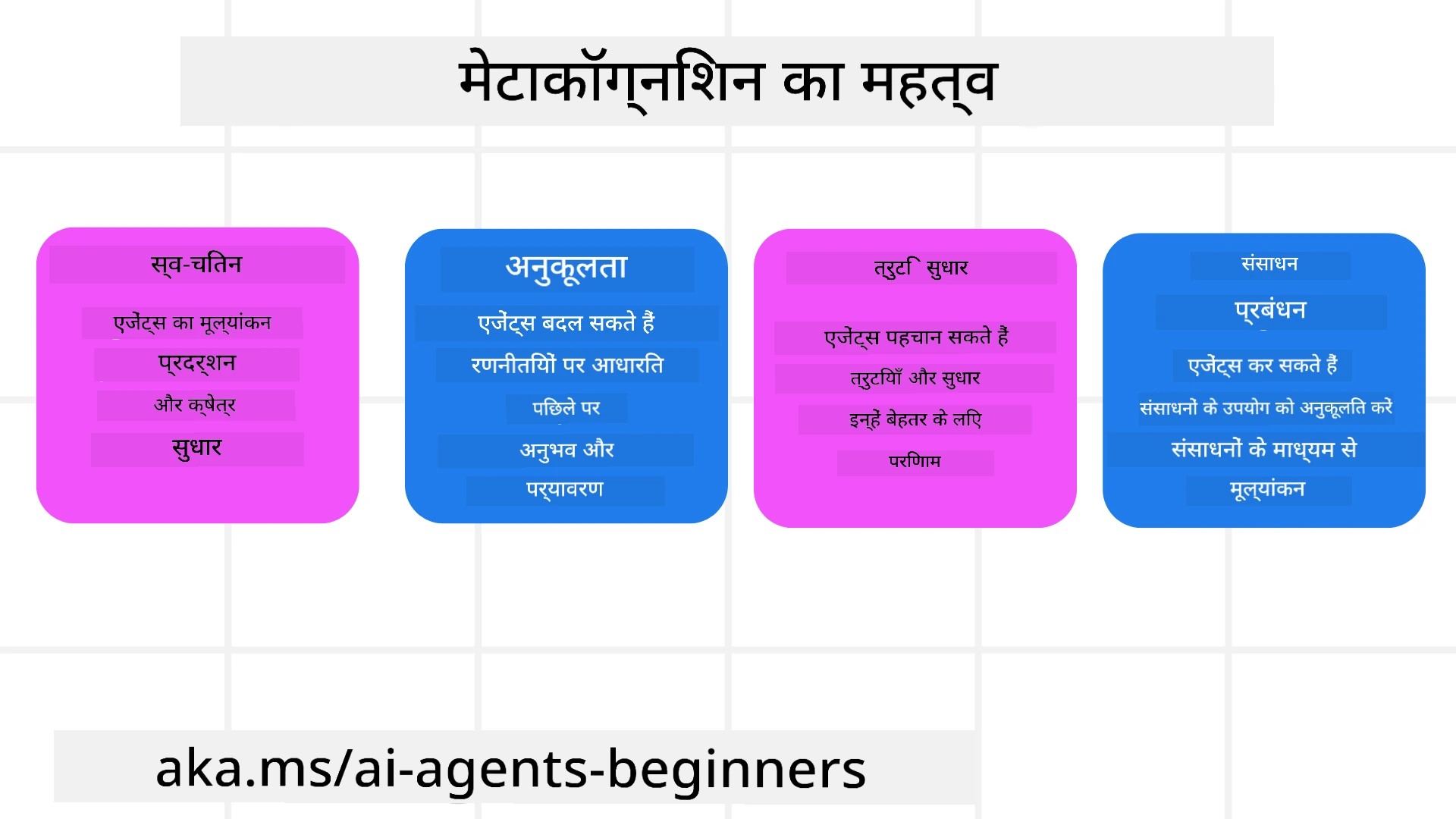
- आत्म-प्रतिबिंब: एजेंट अपने प्रदर्शन का आकलन कर सकते हैं और सुधार के लिए क्षेत्र पहचान सकते हैं।
- अनुकूलन: एजेंट अपने रणनीतियों को पिछले अनुभवों और बदलते वातावरण के आधार पर संशोधित कर सकते हैं।
- त्रुटि सुधार: एजेंट स्वायत्त रूप से त्रुटियाँ पहचान सकते हैं और सुधार सकते हैं, जिससे अधिक सटीक परिणाम मिलते हैं।
- संसाधन प्रबंधन: एजेंट अपने कार्यों की योजना बनाकर और उनका मूल्यांकन करके समय और कम्प्यूटेशनल शक्ति जैसे संसाधनों का बेहतर उपयोग कर सकते हैं।
एक एआई एजेंट के घटक
मेटाकॉग्निटिव प्रक्रियाओं में गहराई से जाने से पहले, यह समझना आवश्यक है कि एक एआई एजेंट के बुनियादी घटक क्या हैं। एक एआई एजेंट आमतौर पर नीचे से बना होता है:
- पर्सोना: एजेंट की व्यक्तित्व और विशेषताएं, जो यह निर्धारित करती हैं कि यह उपयोगकर्ताओं के साथ कैसे इंटरैक्ट करता है।
- उपकरण: वे क्षमताएं और कार्य जिन्हें एजेंट निष्पादित कर सकता है।
- कौशल: वह ज्ञान और विशेषज्ञता जो एजेंट के पास होती है।
ये घटक मिलकर एक “विशेषज्ञता इकाई” बनाते हैं जो विशिष्ट कार्य कर सकती है।
उदाहरण: एक ट्रैवल एजेंट का उदाहरण लें, जो न केवल आपकी छुट्टियों की योजना बनाता है बल्कि वास्तविक समय के डेटा और पिछले ग्राहक यात्रा अनुभवों के आधार पर अपने रास्ते को समायोजित भी करता है।
उदाहरण: एक ट्रैवल एजेंट सेवा में मेटाकॉग्निशन
कल्पना करें कि आप एआई संचालित ट्रैवल एजेंट सेवा डिज़ाइन कर रहे हैं। यह एजेंट, “ट्रैवल एजेंट,” उपयोगकर्ताओं की छुट्टियों की योजना बनाने में मदद करता है। मेटाकॉग्निशन को शामिल करने के लिए, ट्रैवल एजेंट को आत्म-जागरूकता और पिछले अनुभवों के आधार पर अपनी क्रियाओं का मूल्यांकन और समायोजन करना होगा। यहां बताया गया है कि मेटाकॉग्निशन कैसे भूमिका निभा सकता है:
वर्तमान कार्य
वर्तमान कार्य एक उपयोगकर्ता की पेरिस यात्रा की योजना बनाने में मदद करना है।
कार्य पूरा करने के चरण
- उपयोगकर्ता वरीयताएं इकट्ठा करें: उपयोगकर्ता से उनके यात्रा की तारीखें, बजट, रुचियाँ (जैसे संग्रहालय, व्यंजन, खरीदारी) और कोई विशिष्ट आवश्यकताएं पूछें।
- जानकारी प्राप्त करें: उपयोगकर्ता की वरीयताओं के अनुसार उड़ान विकल्प, आवास, आकर्षण, और रेस्तरां खोजें।
- सिफारिशें बनाएं: उड़ान विवरण, होटल आरक्षण और सुझाए गए गतिविधियों के साथ एक व्यक्तिगत यात्रा कार्यक्रम प्रदान करें।
- प्रतिक्रिया के आधार पर समायोजन करें: सिफारिशों पर उपयोगकर्ता से प्रतिक्रिया प्राप्त करें और आवश्यक समायोजन करें।
आवश्यक संसाधन
- उड़ान और होटल बुकिंग डेटाबेस तक पहुँच।
- पेरिस के आकर्षणों और रेस्तरां की जानकारी।
- पिछली बातचीत से उपयोगकर्ता प्रतिक्रिया डेटा।
अनुभव और आत्म-प्रतिबिंब
ट्रैवल एजेंट अपने प्रदर्शन का मूल्यांकन करने और पिछले अनुभवों से सीखने के लिए मेटाकॉग्निशन का उपयोग करता है। उदाहरण के लिए:
- उपयोगकर्ता प्रतिक्रिया का विश्लेषण: ट्रैवल एजेंट यह देखता है कि कौन सी सिफारिशें अच्छी तरह स्वीकार की गईं और कौन सी नहीं। यह अपनी भविष्य की सिफारिशों को उसी अनुसार समायोजित करता है।
- अनुकूलन: यदि किसी उपयोगकर्ता ने पहले भीड़ वाले स्थानों को पसंद नहीं किया है, तो ट्रैवल एजेंट भविष्य में पीक घंटों में लोकप्रिय पर्यटन स्थलों की सिफारिश करने से बचेगा।
- त्रुटि सुधार: यदि ट्रैवल एजेंट ने पिछली बुकिंग में कोई गलती की, जैसे पूर्णतः बुक एक होटल सुझाना, तो यह सिफारिशें देने से पहले उपलब्धता की अधिक सख्ती से जांच करना सीखता है।
व्यावहारिक डेवलपर उदाहरण
यहाँ एक सरलीकृत उदाहरण है कि मेटाकॉग्निशन को शामिल करते हुए ट्रैवल एजेंट का कोड कैसा दिख सकता है:
class Travel_Agent:
    def __init__(self):
        self.user_preferences = {}
        self.experience_data = []

    def gather_preferences(self, preferences):
        self.user_preferences = preferences

    def retrieve_information(self):
        # प्राथमिकताओं के आधार पर उड़ानें, होटल और आकर्षण खोजें
        flights = search_flights(self.user_preferences)
        hotels = search_hotels(self.user_preferences)
        attractions = search_attractions(self.user_preferences)
        return flights, hotels, attractions

    def generate_recommendations(self):
        flights, hotels, attractions = self.retrieve_information()
        itinerary = create_itinerary(flights, hotels, attractions)
        return itinerary

    def adjust_based_on_feedback(self, feedback):
        self.experience_data.append(feedback)
        # प्रतिक्रिया का विश्लेषण करें और भविष्य की सिफारिशों को समायोजित करें
        self.user_preferences = adjust_preferences(self.user_preferences, feedback)

# उदाहरण उपयोग
travel_agent = Travel_Agent()
preferences = {
    "destination": "Paris",
    "dates": "2025-04-01 to 2025-04-10",
    "budget": "moderate",
    "interests": ["museums", "cuisine"]
}
travel_agent.gather_preferences(preferences)
itinerary = travel_agent.generate_recommendations()
print("Suggested Itinerary:", itinerary)
feedback = {"liked": ["Louvre Museum"], "disliked": ["Eiffel Tower (too crowded)"]}
travel_agent.adjust_based_on_feedback(feedback)
मेटाकॉग्निशन क्यों महत्वपूर्ण है
- आत्म-प्रतिबिंब: एजेंट अपने प्रदर्शन का विश्लेषण कर सकते हैं और सुधार के क्षेत्र पहचान सकते हैं।
- अनुकूलन: एजेंट प्रतिक्रिया और बदलती परिस्थितियों के आधार पर रणनीतियाँ संशोधित कर सकते हैं।
- त्रुटि सुधार: एजेंट स्वायत्त रूप से गलतियों का पता लगा सकते हैं और उन्हें सुधार सकते हैं।
- संसाधन प्रबंधन: एजेंट समय और कम्प्यूटेशनल पावर जैसे संसाधनों का अधिकतम उपयोग कर सकते हैं।
मेटाकॉग्निशन को शामिल करके, ट्रैवल एजेंट अधिक व्यक्तिगत और सटीक यात्रा सिफारिशें प्रदान कर सकता है, जिससे कुल उपयोगकर्ता अनुभव में सुधार होगा।
2. एजेंट्स में योजना बनाना
योजना बनाना एआई एजेंट के व्यवहार का एक महत्वपूर्ण घटक है। इसमें लक्ष्य प्राप्त करने के लिए आवश्यक कदमों की रूपरेखा बनाना शामिल है, जिसमें वर्तमान स्थिति, संसाधन और संभावित बाधाओं पर विचार किया जाता है।
योजना के तत्व
- वर्तमान कार्य: कार्य को स्पष्ट रूप से परिभाषित करें।
- कार्य पूरा करने के कदम: कार्य को प्रबंधनीय चरणों में विभाजित करें।
- आवश्यक संसाधन: आवश्यक संसाधनों की पहचान करें।
- अनुभव: योजना बनाने में पिछले अनुभवों का उपयोग करें।
उदाहरण: यहां वे चरण दिए गए हैं जिनका पालन ट्रैवल एजेंट को उपयोगकर्ता की यात्रा की प्रभावी योजना बनाने में मदद करने के लिए करना होगा:
ट्रैवल एजेंट के लिए चरण
- उपयोगकर्ता वरीयताएं इकट्ठा करें
- उपयोगकर्ता से उनके यात्रा की तारीखें, बजट, रुचियों, और किसी विशिष्ट आवश्यकता के बारे में पूछें।
- उदाहरण: “आप कब यात्रा करने की योजना बना रहे हैं?” “आपका बजट सीमा क्या है?” “आप छुट्टियों में कौन-कौन सी गतिविधियाँ पसंद करते हैं?”
- जानकारी प्राप्त करें
- उपयोगकर्ता की वरीयताओं के आधार पर संबंधित यात्रा विकल्प खोजें।
- उड़ानें: उपयोगकर्ता के बजट और पसंदीदा यात्रा तिथियों के भीतर उपलब्ध उड़ानों की तलाश करें।
- आवास: ऐसे होटल या किराये की संपत्तियां ढूंढ़ें जो स्थान, मूल्य और सुविधाओं के लिए उपयोगकर्ता की पसंद से मेल खाती हों।
- आकर्षण और रेस्तरां: लोकप्रिय आकर्षण, गतिविधियाँ, और भोजन विकल्प पहचानें जो उपयोगकर्ता की रुचियों के अनुरूप हों।
- सिफारिशें बनाएं
- प्राप्त जानकारी को एक व्यक्तिगत यात्रा कार्यक्रम में संकलित करें।
- उड़ान विकल्प, होटल आरक्षण और सुझाए गए गतिविधियों जैसी विवरण प्रदान करें, सुनिश्चित करें कि सिफारिशें उपयोगकर्ता की वरीयताओं के अनुरूप हों।
- यात्रा कार्यक्रम उपयोगकर्ता को प्रस्तुत करें
- प्रस्तावित यात्रा कार्यक्रम को समीक्षा के लिए उपयोगकर्ता के साथ साझा करें।
- उदाहरण: “यहाँ आपके पेरिस यात्रा के लिए एक प्रस्तावित यात्रा कार्यक्रम है। इसमें उड़ान विवरण, होटल बुकिंग और सुझावित गतिविधियों एवं रेस्तरां की सूची शामिल है। कृपया अपनी प्रतिक्रिया दें!”
- प्रतिक्रिया एकत्र करें
- प्रस्तावित यात्रा कार्यक्रम पर उपयोगकर्ता से प्रतिक्रिया मांगें।
- उदाहरण: “क्या आपको उड़ान विकल्प पसंद आए?” “क्या होटल आपकी जरूरतों के अनुसार है?” “क्या आप कोई गतिविधियाँ जोड़ना या हटाना चाहेंगे?”
- प्रतिक्रिया के आधार पर समायोजन करें
- उपयोगकर्ता की प्रतिक्रिया के अनुसार यात्रा कार्यक्रम में परिवर्तन करें।
- उड़ान, आवास और गतिविधि की सिफारिशों में आवश्यक बदलाव करें ताकि वे उपयोगकर्ता की वरीयताओं से अधिक मेल खाएं।
- अंतिम पुष्टि
- अंतिम पुष्टि के लिए अपडेट किए गए यात्रा कार्यक्रम को उपयोगकर्ता को प्रस्तुत करें।
- उदाहरण: “मैंने आपकी प्रतिक्रिया के आधार पर समायोजन किए हैं। यहाँ अपडेट किया हुआ यात्रा कार्यक्रम है। क्या सब कुछ ठीक लग रहा है?”
- बुकिंग और पुष्टि करें
- एक बार उपयोगकर्ता ने यात्रा कार्यक्रम को अनुमोदित कर दिया, तो उड़ानें, आवास, और किसी भी पूर्व-योजित गतिविधियों की बुकिंग करें।
- पुष्टि विवरण उपयोगकर्ता को भेजें।
- लगातार समर्थन प्रदान करें
- यात्रा की शुरुआत से पहले और दौरान किसी भी परिवर्तन या अतिरिक्त अनुरोध में उपयोगकर्ता की सहायता के लिए उपलब्ध रहें।
- उदाहरण: “अगर आपको यात्रा के दौरान किसी भी सहायता की ज़रूरत हो, तो कभी भी मुझसे संपर्क करें!”
उदाहरण इंटरैक्शन
class Travel_Agent:
    def __init__(self):
        self.user_preferences = {}
        self.experience_data = []

    def gather_preferences(self, preferences):
        self.user_preferences = preferences

    def retrieve_information(self):
        flights = search_flights(self.user_preferences)
        hotels = search_hotels(self.user_preferences)
        attractions = search_attractions(self.user_preferences)
        return flights, hotels, attractions

    def generate_recommendations(self):
        flights, hotels, attractions = self.retrieve_information()
        itinerary = create_itinerary(flights, hotels, attractions)
        return itinerary

    def adjust_based_on_feedback(self, feedback):
        self.experience_data.append(feedback)
        self.user_preferences = adjust_preferences(self.user_preferences, feedback)

# booing अनुरोध के भीतर उदाहरण उपयोग
travel_agent = Travel_Agent()
preferences = {
    "destination": "Paris",
    "dates": "2025-04-01 to 2025-04-10",
    "budget": "moderate",
    "interests": ["museums", "cuisine"]
}
travel_agent.gather_preferences(preferences)
itinerary = travel_agent.generate_recommendations()
print("Suggested Itinerary:", itinerary)
feedback = {"liked": ["Louvre Museum"], "disliked": ["Eiffel Tower (too crowded)"]}
travel_agent.adjust_based_on_feedback(feedback)
3. सुधारात्मक RAG प्रणाली
सबसे पहले, आइए समझते हैं RAG टूल और प्री-एम्प्टिव कॉन्टेक्स्ट लोड के बीच अंतर।
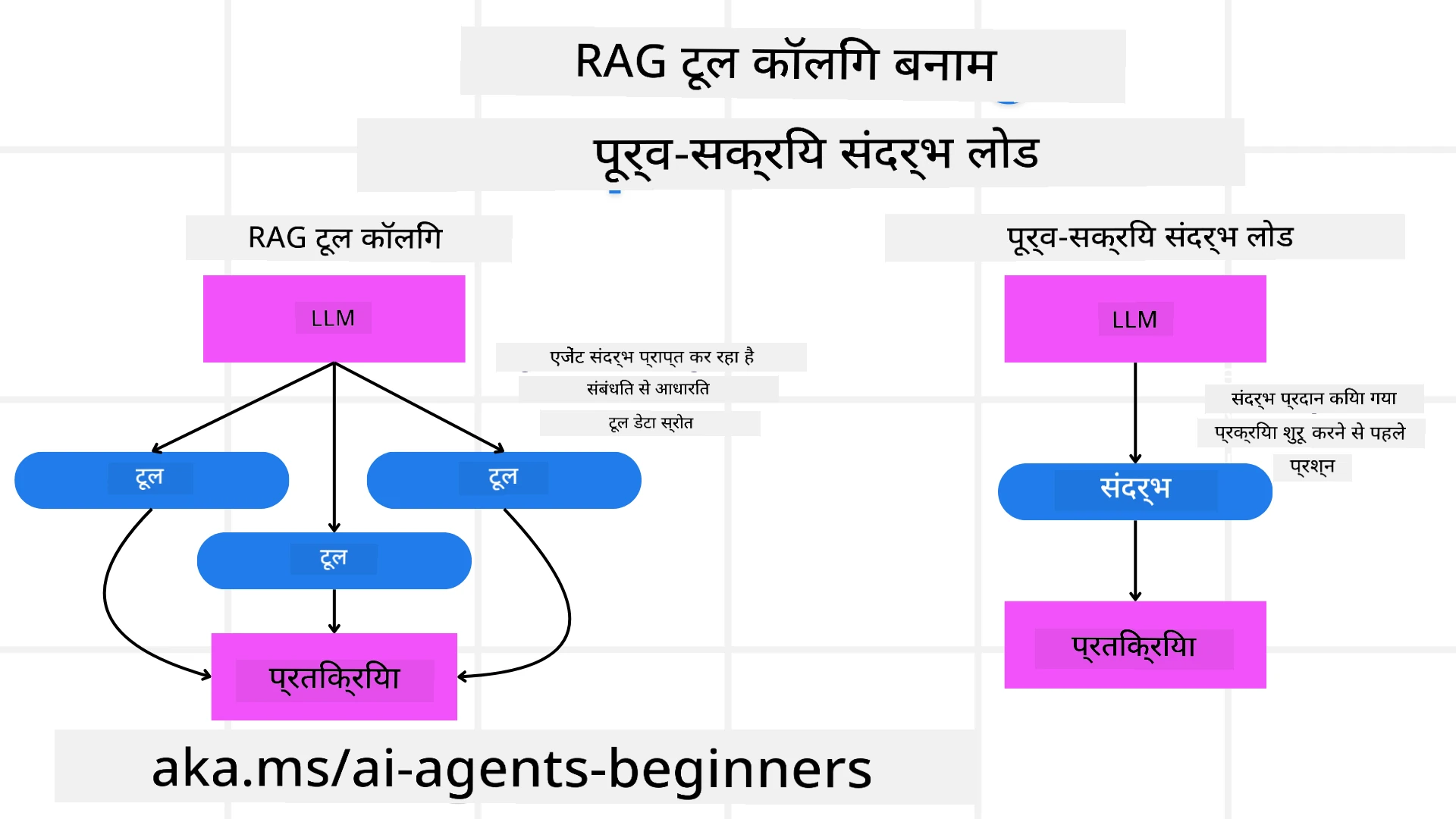
रिट्रीवल-ऑगमेंटेड जनरेशन (RAG)
RAG एक रिट्रीवल सिस्टम को जनरेटिव मॉडल के साथ जोड़ता है। जब कोई क्वेरी की जाती है, तो रिट्रीवल सिस्टम बाहरी स्रोत से प्रासंगिक दस्तावेज़ या डेटा प्राप्त करता है, और यह प्राप्त जानकारी जनरेटिव मॉडल के इनपुट को बढ़ाती है। इससे मॉडल अधिक सटीक और संदर्भानुकूल प्रतिक्रियाएं उत्पन्न कर सकता है।
RAG प्रणाली में, एजेंट ज्ञान आधार से प्रासंगिक जानकारी प्राप्त करता है और इसका उपयोग उपयुक्त प्रतिक्रियाएं या कार्रवाइयाँ उत्पन्न करने में करता है।
सुधारात्मक RAG दृष्टिकोण
सुधारात्मक RAG दृष्टिकोण RAG तकनीकों का उपयोग करके त्रुटियों को सुधारने और एआई एजेंट की सटीकता बढ़ाने पर केंद्रित है। इसमें शामिल हैं:
- प्रॉम्प्टिंग तकनीक: एजेंट को प्रासंगिक जानकारी प्राप्त करने में मार्गदर्शन के लिए विशिष्ट प्रॉम्प्ट का उपयोग करना।
- टूल: ऐसे एल्गोरिदम और यंत्रणा लागू करना जो एजेंट को प्राप्त जानकारी की प्रासंगिकता का मूल्यांकन करने और सटीक प्रतिक्रियाएं उत्पन्न करने में सक्षम बनाते हैं।
- मूल्यांकन: लगातार एजेंट के प्रदर्शन का आकलन करना और उसकी सटीकता और दक्षता सुधारने के लिए समायोजन करना।
उदाहरण: एक खोज एजेंट में सुधारात्मक RAG
कल्पना करें कि एक खोज एजेंट उपयोगकर्ता क्वेरी का उत्तर देने के लिए वेब से जानकारी प्राप्त करता है। सुधारात्मक RAG दृष्टिकोण में शामिल हो सकता है:
- प्रॉम्प्टिंग तकनीक: उपयोगकर्ता इनपुट के आधार पर खोज क्वेरी बनाना।
- टूल: प्राकृतिक भाषा प्रसंस्करण और मशीन लर्निंग एल्गोरिदम का उपयोग करके खोज परिणामों को रैंक और फिल्टर करना।
- मूल्यांकन: प्राप्त जानकारी में गलतियों का पता लगाने और सुधारने के लिए उपयोगकर्ता प्रतिक्रिया का विश्लेषण।
ट्रैवल एजेंट में सुधारात्मक RAG
सुधारात्मक RAG (रिट्रीवल-ऑगमेंटेड जनरेशन) एआई की जानकारी प्राप्त करने और उत्पन्न करने की क्षमता को बढ़ाता है, साथ ही त्रुटियों को सुधारता है। आइए देखें कि ट्रैवल एजेंट कैसे सुधारात्मक RAG दृष्टिकोण का उपयोग करके अधिक सटीक और प्रासंगिक यात्रा सिफारिशें प्रदान कर सकता है।
इसमें शामिल हैं:
- प्रॉम्प्टिंग तकनीक: एजेंट को प्रासंगिक जानकारी प्राप्त करने के लिए विशिष्ट प्रॉम्प्ट का उपयोग करना।
- टूल: ऐसे एल्गोरिदम और यंत्रणा लागू करना जो एजेंट को प्राप्त जानकारी की प्रासंगिकता का मूल्यांकन करने और सटीक प्रतिक्रियाएं उत्पन्न करने में सक्षम बनाते हैं।
- मूल्यांकन: एजेंट के प्रदर्शन का लगातार मूल्यांकन करना और उसकी सटीकता व दक्षता सुधारने के लिए समायोजन करना।
ट्रैवल एजेंट में सुधारात्मक RAG लागू करने के चरण
- प्रारंभिक उपयोगकर्ता इंटरैक्शन
- ट्रैवल एजेंट उपयोगकर्ता से प्रारंभिक वरीयताएं एकत्र करता है, जैसे गंतव्य, यात्रा तिथियाँ, बजट, और रुचियाँ।
-
उदाहरण:
preferences = {
    "destination": "Paris",
    "dates": "2025-04-01 to 2025-04-10",
    "budget": "moderate",
    "interests": ["museums", "cuisine"]
}
- जानकारी प्राप्त करना
- ट्रैवल एजेंट उपयोगकर्ता वरीयताओं के आधार पर उड़ानें, आवास, आकर्षण, और रेस्तरां संबंधित जानकारी प्राप्त करता है।
-
उदाहरण:
flights = search_flights(preferences)
hotels = search_hotels(preferences)
attractions = search_attractions(preferences)
- प्रारंभिक सिफारिशें बनाना
- ट्रैवल एजेंट प्राप्त जानकारी का उपयोग करके एक व्यक्तिगत यात्रा कार्यक्रम बनाता है।
-
उदाहरण:
itinerary = create_itinerary(flights, hotels, attractions)
print("Suggested Itinerary:", itinerary)
- उपयोगकर्ता प्रतिक्रिया एकत्र करना
- ट्रैवल एजेंट प्रारंभिक सिफारिशों पर उपयोगकर्ता से प्रतिक्रिया मांगता है।
-
उदाहरण:
feedback = {
    "liked": ["Louvre Museum"],
    "disliked": ["Eiffel Tower (too crowded)"]
}
- सुधारात्मक RAG प्रक्रिया
- प्रॉम्प्टिंग तकनीक: ट्रैवल एजेंट उपयोगकर्ता की प्रतिक्रिया के आधार पर नई खोज क्वेरियाँ बनाता है।
-
उदाहरण:
if "disliked" in feedback:
    preferences["avoid"] = feedback["disliked"]
-
- टूल: ट्रैवल एजेंट नई खोज परिणामों को रैंक और फिल्टर करने के लिए एल्गोरिदम का उपयोग करता है, उपयोगकर्ता प्रतिक्रिया के आधार पर प्रासंगिकता पर जोर देता है।
-
उदाहरण:
new_attractions = search_attractions(preferences)
new_itinerary = create_itinerary(flights, hotels, new_attractions)
print("Updated Itinerary:", new_itinerary)
-
- मूल्यांकन: ट्रैवल एजेंट उपयोगकर्ता प्रतिक्रिया का विश्लेषण कर अपनी सिफारिशों की प्रासंगिकता और सटीकता का निरंतर मूल्यांकन करता है और आवश्यक समायोजन करता है।
-
उदाहरण:
def adjust_preferences(preferences, feedback):
    if "liked" in feedback:
        preferences["favorites"] = feedback["liked"]
    if "disliked" in feedback:
        preferences["avoid"] = feedback["disliked"]
    return preferences

preferences = adjust_preferences(preferences, feedback)
-
- प्रॉम्प्टिंग तकनीक: ट्रैवल एजेंट उपयोगकर्ता की प्रतिक्रिया के आधार पर नई खोज क्वेरियाँ बनाता है।
व्यावहारिक उदाहरण
यहाँ ट्रैवल एजेंट में सुधारात्मक RAG दृष्टिकोण को शामिल करने वाला एक सरल Python कोड उदाहरण है:
class Travel_Agent:
    def __init__(self):
        self.user_preferences = {}
        self.experience_data = []

    def gather_preferences(self, preferences):
        self.user_preferences = preferences

    def retrieve_information(self):
        flights = search_flights(self.user_preferences)
        hotels = search_hotels(self.user_preferences)
        attractions = search_attractions(self.user_preferences)
        return flights, hotels, attractions

    def generate_recommendations(self):
        flights, hotels, attractions = self.retrieve_information()
        itinerary = create_itinerary(flights, hotels, attractions)
        return itinerary

    def adjust_based_on_feedback(self, feedback):
        self.experience_data.append(feedback)
        self.user_preferences = adjust_preferences(self.user_preferences, feedback)
        new_itinerary = self.generate_recommendations()
        return new_itinerary

# उदाहरण उपयोग
travel_agent = Travel_Agent()
preferences = {
    "destination": "Paris",
    "dates": "2025-04-01 to 2025-04-10",
    "budget": "moderate",
    "interests": ["museums", "cuisine"]
}
travel_agent.gather_preferences(preferences)
itinerary = travel_agent.generate_recommendations()
print("Suggested Itinerary:", itinerary)
feedback = {"liked": ["Louvre Museum"], "disliked": ["Eiffel Tower (too crowded)"]}
new_itinerary = travel_agent.adjust_based_on_feedback(feedback)
print("Updated Itinerary:", new_itinerary)
प्री-एम्प्टिव कॉन्टेक्स्ट लोड
प्री-एम्प्टिव कॉन्टेक्स्ट लोड का मतलब है क्वेरी को प्रोसेस करने से पहले मॉडल में संबंधित संदर्भ या पृष्ठभूमि जानकारी लोड करना। इसका मतलब है कि मॉडल को शुरू से ही इस जानकारी तक पहुँच प्राप्त होती है, जो इसे अधिक सूचित प्रतिक्रियाएँ उत्पन्न करने में मदद कर सकती है बिना प्रक्रिया के दौरान अतिरिक्त डेटा पुनः प्राप्त किए।
यहाँ एक सरल उदाहरण दिया गया है कि प्री-एम्प्टिव कॉन्टेक्स्ट लोड ट्रैवल एजेंट एप्लिकेशन के लिए Python में कैसा दिख सकता है:
class TravelAgent:
    def __init__(self):
        # लोकप्रिय गंतव्यों और उनकी जानकारी को पहले से लोड करें
        self.context = {
            "Paris": {"country": "France", "currency": "Euro", "language": "French", "attractions": ["Eiffel Tower", "Louvre Museum"]},
            "Tokyo": {"country": "Japan", "currency": "Yen", "language": "Japanese", "attractions": ["Tokyo Tower", "Shibuya Crossing"]},
            "New York": {"country": "USA", "currency": "Dollar", "language": "English", "attractions": ["Statue of Liberty", "Times Square"]},
            "Sydney": {"country": "Australia", "currency": "Dollar", "language": "English", "attractions": ["Sydney Opera House", "Bondi Beach"]}
        }

    def get_destination_info(self, destination):
        # पूर्व-लोड किए गए संदर्भ से गंतव्य जानकारी प्राप्त करें
        info = self.context.get(destination)
        if info:
            return f"{destination}:\nCountry: {info['country']}\nCurrency: {info['currency']}\nLanguage: {info['language']}\nAttractions: {', '.join(info['attractions'])}"
        else:
            return f"Sorry, we don't have information on {destination}."

# उदाहरण उपयोग
travel_agent = TravelAgent()
print(travel_agent.get_destination_info("Paris"))
print(travel_agent.get_destination_info("Tokyo"))
व्याख्या
-
इनिशियलाइज़ेशन (
__init__मेथड):TravelAgentक्लास लोकप्रिय गंतव्यों जैसे पेरिस, टोक्यो, न्यूयॉर्क, और सिडनी के बारे में जानकारी वाला एक डिक्शनरी प्री-लोड करता है। इस डिक्शनरी में प्रत्येक गंतव्य के लिए देश, मुद्रा, भाषा, और प्रमुख आकर्षण जैसे विवरण शामिल हैं। -
जानकारी प्राप्त करना (
get_destination_infoमेथड): जब उपयोगकर्ता किसी विशेष गंतव्य के बारे में पूछता है, तोget_destination_infoमेथड प्री-लोड किए गए संदर्भ डिक्शनरी से प्रासंगिक जानकारी प्राप्त करता है।
संदर्भ को प्री-लोड करके, ट्रैवल एजेंट एप्लिकेशन उपयोगकर्ता की क्वेरी का जल्दी जवाब दे सकता है बिना वास्तविक समय में इस जानकारी को बाहरी स्रोत से पुनः प्राप्त किए। इससे एप्लिकेशन अधिक प्रभावी और प्रतिक्रियाशील बनता है।
लक्ष्य के साथ योजना की बूटस्ट्रैपिंग करने से पहले पुनरावृत्ति
लक्ष्य के साथ योजना की बूटस्ट्रैपिंग का मतलब है एक स्पष्ट उद्देश्य या लक्षित परिणाम के साथ शुरू करना। इस लक्ष्य को पहले निर्धारित करके, मॉडल इसे पुनरावृत्त प्रक्रिया के दौरान एक मार्गदर्शक सिद्धांत के रूप में उपयोग कर सकता है। इससे सुनिश्चित होता है कि प्रत्येक पुनरावृत्ति इच्छित परिणाम की प्राप्ति के करीब जाती है, जिससे प्रक्रिया अधिक प्रभावी और केंद्रित बनती है।
यहाँ एक उदाहरण है कि कैसे आप Python में ट्रैवल एजेंट के लिए पुनरावृत्त करने से पहले लक्ष्य के साथ यात्रा योजना को बूटस्ट्रैप कर सकते हैं:
परिदृश्य
एक ट्रैवल एजेंट ग्राहक के लिए एक अनुकूलित छुट्टियाँ योजना बनाना चाहता है। लक्ष्य ग्राहक की प्राथमिकताओं और बजट के आधार पर उनकी संतुष्टि को अधिकतम करने वाला यात्रा कार्यक्रम बनाना है।
चरण
- ग्राहक की प्राथमिकताओं और बजट को परिभाषित करें।
- इन प्राथमिकताओं के आधार पर प्रारंभिक योजना बूटस्ट्रैप करें।
- योजना को परिष्कृत करने के लिए पुनरावृत्त करें, ग्राहक की संतुष्टि के लिए अनुकूलित।
Python कोड
class TravelAgent:
    def __init__(self, destinations):
        self.destinations = destinations

    def bootstrap_plan(self, preferences, budget):
        plan = []
        total_cost = 0

        for destination in self.destinations:
            if total_cost + destination['cost'] <= budget and self.match_preferences(destination, preferences):
                plan.append(destination)
                total_cost += destination['cost']

        return plan

    def match_preferences(self, destination, preferences):
        for key, value in preferences.items():
            if destination.get(key) != value:
                return False
        return True

    def iterate_plan(self, plan, preferences, budget):
        for i in range(len(plan)):
            for destination in self.destinations:
                if destination not in plan and self.match_preferences(destination, preferences) and self.calculate_cost(plan, destination) <= budget:
                    plan[i] = destination
                    break
        return plan

    def calculate_cost(self, plan, new_destination):
        return sum(destination['cost'] for destination in plan) + new_destination['cost']

# उदाहरण उपयोग
destinations = [
    {"name": "Paris", "cost": 1000, "activity": "sightseeing"},
    {"name": "Tokyo", "cost": 1200, "activity": "shopping"},
    {"name": "New York", "cost": 900, "activity": "sightseeing"},
    {"name": "Sydney", "cost": 1100, "activity": "beach"},
]

preferences = {"activity": "sightseeing"}
budget = 2000

travel_agent = TravelAgent(destinations)
initial_plan = travel_agent.bootstrap_plan(preferences, budget)
print("Initial Plan:", initial_plan)

refined_plan = travel_agent.iterate_plan(initial_plan, preferences, budget)
print("Refined Plan:", refined_plan)
कोड व्याख्या
-
इनिशियलाइज़ेशन (
__init__मेथड):TravelAgentक्लास संभावित गंतव्यों की एक सूची के साथ इनिशियलाइज़ होता है, जिनमें प्रत्येक के पास नाम, लागत, और गतिविधि प्रकार जैसे गुण होते हैं। -
प्लान बूटस्ट्रैपिंग (
bootstrap_planमेथड): यह मेथड ग्राहक की प्राथमिकताओं और बजट के आधार पर प्रारंभिक यात्रा योजना बनाता है। यह गंतव्यों की सूची से गुजरता है और यदि वे ग्राहक की प्राथमिकताओं से मेल खाते हैं और बजट के भीतर फिट बैठते हैं, तो उन्हें योजना में जोड़ता है। -
प्राथमिकताओं से मेल खोजना (
match_preferencesमेथड): यह मेथड जांचता है कि कोई गंतव्य ग्राहक की प्राथमिकताओं से मेल खाता है या नहीं। -
योजना पुनरावृत्ति (
iterate_planमेथड): यह मेथड प्रारंभिक योजना को संशोधित करता है, योजना में प्रत्येक गंतव्य को एक बेहतर मेल से प्रतिस्थापित करने की कोशिश करता है, ग्राहक की प्राथमिकताओं और बजट सीमाओं को ध्यान में रखते हुए। -
लागत की गणना (
calculate_costमेथड): यह मेथड वर्तमान योजना की कुल लागत की गणना करता है, जिसमें संभावित नया गंतव्य भी शामिल है।
उदाहरण उपयोग
- प्रारंभिक योजना: ट्रैवल एजेंट ग्राहक की सैर की प्राथमिकताओं और $2000 के बजट के आधार पर प्रारंभिक योजना बनाता है।
- संशोधित योजना: ट्रैवल एजेंट योजना को पुनरावृत्त करता है, ग्राहक की प्राथमिकताओं और बजट के लिए अनुकूलित करता है।
स्पष्ट लक्ष्य (जैसे ग्राहक संतुष्टि को अधिकतम करना) के साथ योजना को बूटस्ट्रैप करके और योजना को परिष्कृत करने के लिए पुनरावृत्त करके, ट्रैवल एजेंट ग्राहक के लिए एक अनुकूलित और अनुकूलित यात्रा कार्यक्रम बना सकता है। यह तरीका सुनिश्चित करता है कि यात्रा योजना शुरू से ही ग्राहक की प्राथमिकताओं और बजट के अनुरूप हो और प्रत्येक पुनरावृत्ति के साथ बेहतर होती जाए।
पुनः रैंकिंग और स्कोरिंग के लिए LLM का लाभ उठाना
बड़े भाषा मॉडल (LLMs) का उपयोग पुनः रैंकिंग और स्कोरिंग के लिए किया जा सकता है, जो पुनः प्राप्त दस्तावेजों या उत्पन्न प्रतिक्रियाओं की प्रासंगिकता और गुणवत्ता का मूल्यांकन करते हैं। यह कैसे काम करता है:
पुनः प्राप्ति: प्रारंभिक पुनः प्राप्ति चरण क्वेरी के आधार पर प्रत्याशी दस्तावेजों या प्रतिक्रियाओं का एक सेट लाता है।
पुनः रैंकिंग: LLM इन उम्मीदवारों का मूल्यांकन करता है और उनकी प्रासंगिकता और गुणवत्ता के आधार पर पुनः रैंक करता है। यह कदम यह सुनिश्चित करता है कि सबसे प्रासंगिक और उच्च गुणवत्ता वाली जानकारी पहले प्रस्तुत हो।
स्कोरिंग: LLM हर उम्मीदवार को उनके प्रासंगिकता और गुणवत्ता को दर्शाने वाले स्कोर सौंपता है। इससे उपयोगकर्ता के लिए सबसे अच्छा जवाब या दस्तावेज़ चुनने में मदद मिलती है।
पुनः रैंकिंग और स्कोरिंग के लिए LLMs का लाभ उठाकर, सिस्टम अधिक सटीक और संदर्भानुकूल जानकारी प्रदान कर सकता है, जिससे समग्र उपयोगकर्ता अनुभव बेहतर होता है।
यहाँ एक उदाहरण है कि ट्रैवल एजेंट उपयोगकर्ता की प्राथमिकताओं के आधार पर ट्रैवल गंतव्यों को पुनः रैंकिंग और स्कोरिंग करने के लिए Python में बड़े भाषा मॉडल (LLM) का उपयोग कैसे कर सकता है:
परिदृश्य - प्राथमिकताओं आधारित यात्रा
एक ट्रैवल एजेंट ग्राहक की प्राथमिकताओं के आधार पर सर्वश्रेष्ठ यात्रा गंतव्य सुझाना चाहता है। LLM गंतव्यों को पुनः रैंक और स्कोर करने में मदद करेगा ताकि सबसे प्रासंगिक विकल्प प्रस्तुत हो सकें।
चरण:
- उपयोगकर्ता की प्राथमिकताओं को इकट्ठा करें।
- संभावित यात्रा गंतव्यों की सूची पुनः प्राप्त करें।
- LLM का उपयोग करके उपयोगकर्ता की प्राथमिकताओं के आधार पर गंतव्यों को पुनः रैंक और स्कोर करें।
यहाँ बताया गया है कि आप पिछले उदाहरण को Azure OpenAI Services का उपयोग करने के लिए कैसे अपडेट कर सकते हैं:
आवश्यकताएँ
- आपके पास Azure सब्सक्रिप्शन होना चाहिए।
- Azure OpenAI संसाधन बनाएँ और अपनी API कुंजी प्राप्त करें।
उदाहरण Python कोड
import requests
import json

class TravelAgent:
    def __init__(self, destinations):
        self.destinations = destinations

    def get_recommendations(self, preferences, api_key, endpoint):
        # Azure OpenAI के लिए एक प्रॉम्प्ट तैयार करें
        prompt = self.generate_prompt(preferences)

        # अनुरोध के लिए हेडर और पेलोड परिभाषित करें
        headers = {
            'Content-Type': 'application/json',
            'Authorization': f'Bearer {api_key}'
        }
        payload = {
            "prompt": prompt,
            "max_tokens": 150,
            "temperature": 0.7
        }

        # रैंकिंग और स्कोर किए गए गंतव्यों को प्राप्त करने के लिए Azure OpenAI API कॉल करें
        response = requests.post(endpoint, headers=headers, json=payload)
        response_data = response.json()

        # सिफारिशों को निकालें और वापस करें
        recommendations = response_data['choices'][0]['text'].strip().split('\n')
        return recommendations

    def generate_prompt(self, preferences):
        prompt = "Here are the travel destinations ranked and scored based on the following user preferences:\n"
        for key, value in preferences.items():
            prompt += f"{key}: {value}\n"
        prompt += "\nDestinations:\n"
        for destination in self.destinations:
            prompt += f"- {destination['name']}: {destination['description']}\n"
        return prompt

# उदाहरण उपयोग
destinations = [
    {"name": "Paris", "description": "City of lights, known for its art, fashion, and culture."},
    {"name": "Tokyo", "description": "Vibrant city, famous for its modernity and traditional temples."},
    {"name": "New York", "description": "The city that never sleeps, with iconic landmarks and diverse culture."},
    {"name": "Sydney", "description": "Beautiful harbour city, known for its opera house and stunning beaches."},
]

preferences = {"activity": "sightseeing", "culture": "diverse"}
api_key = 'your_azure_openai_api_key'
endpoint = 'https://your-endpoint.com/openai/deployments/your-deployment-name/completions?api-version=2022-12-01'

travel_agent = TravelAgent(destinations)
recommendations = travel_agent.get_recommendations(preferences, api_key, endpoint)
print("Recommended Destinations:")
for rec in recommendations:
    print(rec)
कोड व्याख्या - प्रेफरेंस बुकर
-
इनिशियलाइज़ेशन:
TravelAgentक्लास संभावित यात्रा गंतव्यों की एक सूची के साथ इनिशियलाइज़ होता है, जिसमें प्रत्येक के पास नाम और विवरण जैसे गुण होते हैं। -
सिफारिशें प्राप्त करना (
get_recommendationsमेथड): यह मेथड उपयोगकर्ता की प्राथमिकताओं के आधार पर Azure OpenAI सेवा के लिए एक प्रॉम्प्ट बनाता है और पुनः रैंकिंग और स्कोरिंग के लिए Azure OpenAI API को HTTP POST अनुरोध करता है। -
प्रॉम्प्ट जनरेट करना (
generate_promptमेथड): यह मेथड उपयोगकर्ता की प्राथमिकताओं और गंतव्यों की सूची सहित Azure OpenAI के लिए एक प्रॉम्प्ट बनाता है। प्रॉम्प्ट मॉडल को निर्देश देता है कि वह दी गई प्राथमिकताओं के आधार पर गंतव्यों को पुनः रैंक और स्कोर करे। -
API कॉल:
requestsलाइब्रेरी का उपयोग Azure OpenAI API एंडपॉइंट पर HTTP POST अनुरोध करने के लिए किया जाता है। प्रतिक्रिया में पुनः रैंकिंग और स्कोरिंग वाले गंतव्य होते हैं। -
उदाहरण उपयोग: ट्रैवल एजेंट उपयोगकर्ता की प्राथमिकताओं (जैसे सैर की रुचि और विविध संस्कृति) को इकट्ठा करता है और Azure OpenAI सेवा का उपयोग करके पुनः रैंकिंग और स्कोरिंग वाले सिफारिश प्राप्त करता है।
सुनिश्चित करें कि your_azure_openai_api_key को अपनी वास्तविक Azure OpenAI API कुंजी से और https://your-endpoint.com/... को अपने Azure OpenAI परिनियोजन के वास्तविक एंडपॉइंट URL से बदलें।
LLM का उपयोग पुनः रैंकिंग और स्कोरिंग के लिए करके, ट्रैवल एजेंट ग्राहकों को अधिक व्यक्तिगत और प्रासंगिक यात्रा सिफारिशें प्रदान कर सकता है, जिससे उनका समग्र अनुभव बेहतर होता है।
RAG: प्रॉम्प्टिंग तकनीक बनाम उपकरण
Retrieval-Augmented Generation (RAG) AI एजेंट विकास में एक प्रॉम्प्टिंग तकनीक और एक उपकरण दोनों हो सकता है। दोनों के बीच अंतर को समझना आपको अपने परियोजनाओं में RAG का अधिक प्रभावी ढंग से उपयोग करने में मदद कर सकता है।
प्रॉम्प्टिंग तकनीक के रूप में RAG
यह क्या है?
- एक प्रॉम्प्टिंग तकनीक के रूप में, RAG विशिष्ट क्वेरीज या प्रॉम्प्ट तैयार करने में शामिल होता है ताकि बड़े कॉर्पस या डेटाबेस से प्रासंगिक जानकारी पुनः प्राप्त की जा सके। इस जानकारी का उपयोग प्रतिक्रियाएँ या क्रियाएँ उत्पन्न करने के लिए किया जाता है।
यह कैसे काम करता है:
- प्रॉम्प्ट तैयार करना: कार्य या उपयोगकर्ता इनपुट के आधार पर सुव्यवस्थित प्रॉम्प्ट या क्वेरीज बनाएं।
- जानकारी पुनः प्राप्त करना: पहले से मौजूद ज्ञान आधार या डेटासेट से प्रासंगिक डेटा खोजने के लिए प्रॉम्प्ट का उपयोग करें।
- प्रतिक्रिया उत्पन्न करना: पुनः प्राप्त जानकारी को जनरेटिव AI मॉडल के साथ मिलाकर एक व्यापक और सुसंगत प्रतिक्रिया उत्पन्न करें।
ट्रैवल एजेंट में उदाहरण:
- उपयोगकर्ता इनपुट: “मैं पेरिस में संग्रहालय देखना चाहता हूँ।”
- प्रॉम्प्ट: “पेरिस के शीर्ष संग्रहालय खोजें।”
- पुनः प्राप्त जानकारी: लूव्र संग्रहालय, म्यूज़े डर्से, आदि के विवरण।
- उत्पन्न प्रतिक्रिया: “यहाँ पेरिस के कुछ शीर्ष संग्रहालय हैं: लूव्र संग्रहालय, म्यूज़े डर्से, और सेंट्र पोंपिदू।”
उपकरण के रूप में RAG
यह क्या है?
- एक उपकरण के रूप में, RAG एक एकीकृत प्रणाली है जो पुनः प्राप्ति और सृजन प्रक्रिया को स्वचालित करता है, जिससे डेवलपर्स के लिए प्रत्येक क्वेरी के लिए मैन्युअल रूप से प्रॉम्प्ट बनाने की आवश्यकता के बिना जटिल AI कार्यक्षमता लागू करना आसान हो जाता है।
यह कैसे काम करता है:
- एकीकरण: AI एजेंट की संरचना में RAG को सम्मिलित करें, जिससे यह स्वचालित रूप से पुनः प्राप्ति और सृजन कार्यों को संभाल सके।
- स्वचालन: उपकरण पूरी प्रक्रिया को प्रबंधित करता है, उपयोगकर्ता इनपुट प्राप्त करने से लेकर अंतिम प्रतिक्रिया उत्पन्न करने तक, बिना हर चरण के लिए स्पष्ट प्रॉम्प्ट की आवश्यकता के।
- प्रभावशीलता: एजेंट का प्रदर्शन बेहतर बनाता है पुनः प्राप्ति और सृजन प्रक्रिया को सुव्यवस्थित करके, जिससे जल्दी और अधिक सटीक प्रतिक्रियाएँ मिलती हैं।
ट्रैवल एजेंट में उदाहरण:
- उपयोगकर्ता इनपुट: “मैं पेरिस में संग्रहालय देखना चाहता हूँ।”
- RAG उपकरण: स्वचालित रूप से संग्रहालयों के बारे में जानकारी पुनः प्राप्त करता है और प्रतिक्रिया उत्पन्न करता है।
- उत्पन्न प्रतिक्रिया: “यहाँ पेरिस के कुछ शीर्ष संग्रहालय हैं: लूव्र संग्रहालय, म्यूज़े डर्से, और सेंट्र पोंपिदू।”
तुलना
| पहलू | प्रॉम्प्टिंग तकनीक | उपकरण |
|---|---|---|
| मैनुअल vs स्वचालित | प्रत्येक क्वेरी के लिए मैनुअल प्रॉम्प्ट तैयार करना। | पुनः प्राप्ति और सृजन के लिए स्वचालित प्रक्रिया। |
| नियंत्रण | पुनः प्राप्ति प्रक्रिया पर अधिक नियंत्रण प्रदान करता है। | पुनः प्राप्ति और सृजन को सुव्यवस्थित और स्वचालित करता है। |
| लचीलापन | विशिष्ट आवश्यकताओं के अनुसार अनुकूलित प्रॉम्प्ट की अनुमति देता है। | बड़े पैमाने पर कार्यान्वयन के लिए अधिक प्रभावी। |
| जटिलता | प्रॉम्प्ट बनाने और संशोधित करने की जरूरत होती है। | AI एजेंट की संरचना में एकीकृत करना आसान। |
व्यावहारिक उदाहरण
प्रॉम्प्टिंग तकनीक उदाहरण:
def search_museums_in_paris():
    prompt = "Find top museums in Paris"
    search_results = search_web(prompt)
    return search_results

museums = search_museums_in_paris()
print("Top Museums in Paris:", museums)
उपकरण उदाहरण:
class Travel_Agent:
    def __init__(self):
        self.rag_tool = RAGTool()

    def get_museums_in_paris(self):
        user_input = "I want to visit museums in Paris."
        response = self.rag_tool.retrieve_and_generate(user_input)
        return response

travel_agent = Travel_Agent()
museums = travel_agent.get_museums_in_paris()
print("Top Museums in Paris:", museums)
प्रासंगिकता का मूल्यांकन करना
प्रासंगिकता का मूल्यांकन AI एजेंट के प्रदर्शन का एक महत्वपूर्ण पहलू है। यह सुनिश्चित करता है कि एजेंट द्वारा प्राप्त और उत्पन्न जानकारी उपयोगकर्ता के लिए उपयुक्त, सटीक, और उपयोगी हो। आइए देखें कि AI एजेंट में प्रासंगिकता का मूल्यांकन कैसे करें, व्यावहारिक उदाहरण और तकनीकों सहित।
प्रासंगिकता मूल्यांकन में मुख्य अवधारणाएँ
- संदर्भ जागरूकता:
- एजेंट को उपयोगकर्ता की क्वेरी के संदर्भ को समझना चाहिए ताकि प्रासंगिक जानकारी पुनः प्राप्त और उत्पन्न कर सके।
- उदाहरण: यदि उपयोगकर्ता पूछता है “पेरिस में सबसे अच्छे रेस्तरां कौन से हैं,” तो एजेंट को उपयोगकर्ता की पसंद, जैसे भोजन प्रकार और बजट को ध्यान में रखना चाहिए।
- सटीकता:
- एजेंट द्वारा प्रदान की गई जानकारी तथ्यात्मक रूप से सही और अद्यतित होनी चाहिए।
- उदाहरण: वर्तमान में खुले हुए और अच्छे समीक्षा वाले रेस्तरां सुझाना, न कि पुराने या बंद विकल्प।
- उपयोगकर्ता की मंशा:
- एजेंट को क्वेरी के पीछे उपयोगकर्ता की मंशा को समझना चाहिए ताकि सबसे प्रासंगिक जानकारी प्रदान कर सके।
- उदाहरण: यदि उपयोगकर्ता पूछता है “बजट फ्रेंडली होटल,” तो एजेंट को किफायती विकल्पों को प्राथमिकता देनी चाहिए।
- प्रतिक्रिया चक्र:
- उपयोगकर्ता की प्रतिक्रिया एकत्र करना और विश्लेषण करना एजेंट को अपने प्रासंगिकता मूल्यांकन प्रक्रिया को परिष्कृत करने में मदद करता है।
- उदाहरण: पिछले सिफारिशों पर उपयोगकर्ता रेटिंग और प्रतिक्रिया शामिल करना ताकि भविष्य की प्रतिक्रियाएँ बेहतर हों।
प्रासंगिकता मूल्यांकन के लिए व्यावहारिक तकनीकें
- प्रासंगिकता स्कोरिंग:
- प्रत्येक प्राप्त आइटम को एक प्रासंगिकता स्कोर सौंपें कि यह उपयोगकर्ता की क्वेरी और प्राथमिकताओं से कितना मेल खाता है।
-
उदाहरण:
def relevance_score(item, query):
    score = 0
    if item['category'] in query['interests']:
        score += 1
    if item['price'] <= query['budget']:
        score += 1
    if item['location'] == query['destination']:
        score += 1
    return score
- फ़िल्टरिंग और रैंकिंग:
- अप्रासंगिक आइटमों को छांटें और शेष को उनके प्रासंगिकता स्कोर के अनुसार क्रमित करें।
-
उदाहरण:
def filter_and_rank(items, query):
    ranked_items = sorted(items, key=lambda item: relevance_score(item, query), reverse=True)
    return ranked_items[:10]  # शीर्ष 10 संबंधित आइटम लौटाएं
- नेचुरल लैंग्वेज प्रोसेसिंग (NLP):
- उपयोगकर्ता की क्वेरी को समझने और प्रासंगिक जानकारी पुनः प्राप्त करने के लिए NLP तकनीकों का उपयोग करें।
-
उदाहरण:
def process_query(query):
    # उपयोगकर्ता के प्रश्न से मुख्य जानकारी निकालने के लिए NLP का उपयोग करें
    processed_query = nlp(query)
    return processed_query
- उपयोगकर्ता प्रतिक्रिया एकीकरण:
- प्रदान की गई सिफारिशों पर उपयोगकर्ता की प्रतिक्रिया इकट्ठा करें और भविष्य के प्रासंगिकता मूल्यांकन समायोजित करने के लिए इसका उपयोग करें।
-
उदाहरण:
def adjust_based_on_feedback(feedback, items):
    for item in items:
        if item['name'] in feedback['liked']:
            item['relevance'] += 1
        if item['name'] in feedback['disliked']:
            item['relevance'] -= 1
    return items
उदाहरण: ट्रैवल एजेंट में प्रासंगिकता का मूल्यांकन
यहाँ एक व्यावहारिक उदाहरण है कि ट्रैवल एजेंट यात्रा सिफारिशों की प्रासंगिकता का मूल्यांकन कैसे कर सकता है:
class Travel_Agent:
    def __init__(self):
        self.user_preferences = {}
        self.experience_data = []

    def gather_preferences(self, preferences):
        self.user_preferences = preferences

    def retrieve_information(self):
        flights = search_flights(self.user_preferences)
        hotels = search_hotels(self.user_preferences)
        attractions = search_attractions(self.user_preferences)
        return flights, hotels, attractions

    def generate_recommendations(self):
        flights, hotels, attractions = self.retrieve_information()
        ranked_hotels = self.filter_and_rank(hotels, self.user_preferences)
        itinerary = create_itinerary(flights, ranked_hotels, attractions)
        return itinerary

    def filter_and_rank(self, items, query):
        ranked_items = sorted(items, key=lambda item: self.relevance_score(item, query), reverse=True)
        return ranked_items[:10]  # शीर्ष 10 संबंधित आइटम वापस करें

    def relevance_score(self, item, query):
        score = 0
        if item['category'] in query['interests']:
            score += 1
        if item['price'] <= query['budget']:
            score += 1
        if item['location'] == query['destination']:
            score += 1
        return score

    def adjust_based_on_feedback(self, feedback, items):
        for item in items:
            if item['name'] in feedback['liked']:
                item['relevance'] += 1
            if item['name'] in feedback['disliked']:
                item['relevance'] -= 1
        return items

# उदाहरण उपयोग
travel_agent = Travel_Agent()
preferences = {
    "destination": "Paris",
    "dates": "2025-04-01 to 2025-04-10",
    "budget": "moderate",
    "interests": ["museums", "cuisine"]
}
travel_agent.gather_preferences(preferences)
itinerary = travel_agent.generate_recommendations()
print("Suggested Itinerary:", itinerary)
feedback = {"liked": ["Louvre Museum"], "disliked": ["Eiffel Tower (too crowded)"]}
updated_items = travel_agent.adjust_based_on_feedback(feedback, itinerary['hotels'])
print("Updated Itinerary with Feedback:", updated_items)
मंशा के साथ खोज
मंशा के साथ खोज का मतलब है उपयोगकर्ता की क्वेरी के पीछे छुपे उद्देश्य या लक्ष्य को समझना और व्याख्या करना ताकि सबसे प्रासंगिक और उपयोगी जानकारी पुनः प्राप्त और उत्पन्न की जा सके। इस दृष्टिकोण में केवल कीवर्ड मिलान से परे जाकर उपयोगकर्ता की वास्तविक आवश्यकताओं और संदर्भ को समझा जाता है।
मंशा के साथ खोज में मुख्य अवधारणाएँ
- उपयोगकर्ता की मंशा को समझना:
- उपयोगकर्ता की मंशा मुख्य रूप से तीन प्रकार की होती है: सूचना संबंधी, नेविगेशनल, और लेन-देन संबंधी।
- सूचना संबंधी मंशा: उपयोगकर्ता किसी विषय के बारे में जानकारी चाहता है (जैसे, “पेरिस के सबसे अच्छे संग्रहालय कौन से हैं?”)।
- नेविगेशनल मंशा: उपयोगकर्ता किसी विशिष्ट वेबसाइट या पेज पर जाना चाहता है (जैसे, “लूव्र संग्रहालय आधिकारिक वेबसाइट”)।
- लेन-देन संबंधी मंशा: उपयोगकर्ता कोई लेन-देन करना चाहता है जैसे उड़ान बुक करना या खरीदारी करना (जैसे, “पेरिस के लिए उड़ान बुक करें”)।
- उपयोगकर्ता की मंशा मुख्य रूप से तीन प्रकार की होती है: सूचना संबंधी, नेविगेशनल, और लेन-देन संबंधी।
- संदर्भ जागरूकता:
- उपयोगकर्ता की क्वेरी के संदर्भ का विश्लेषण करना उनकी मंशा की सटीक पहचान में मदद करता है। इसमें पिछले इंटरैक्शन, उपयोगकर्ता की प्राथमिकताओं और वर्तमान क्वेरी के विशिष्ट विवरण शामिल हैं।
- नेचुरल लैंग्वेज प्रोसेसिंग (NLP):
- उपयोगकर्ताओं द्वारा प्रदान की गई प्राकृतिक भाषा क्वेरीज को समझने और व्याख्या करने के लिए NLP तकनीकों का उपयोग किया जाता है। इसमें इकाई पहचान, भावना विश्लेषण, और क्वेरी पार्सिंग जैसे कार्य शामिल हैं।
- व्यक्तिगतकरण:
- उपयोगकर्ता के इतिहास, प्राथमिकताओं, और प्रतिक्रिया के आधार पर खोज परिणामों को व्यक्तिगत बनाना जानकारी की प्रासंगिकता को बढ़ाता है।
व्यावहारिक उदाहरण: ट्रैवल एजेंट में मंशा के साथ खोज
आइए ट्रैवल एजेंट को एक उदाहरण के रूप में लें और देखें कि मंशा के साथ खोज कैसे कार्यान्वित हो सकती है।
-
उपयोगकर्ता की प्राथमिकताएँ एकत्रित करना
class Travel_Agent: def __init__(self): self.user_preferences = {} def gather_preferences(self, preferences): self.user_preferences = preferences -
उपयोगकर्ता की मंशा को समझना
def identify_intent(query): if "book" in query or "purchase" in query: return "transactional" elif "website" in query or "official" in query: return "navigational" else: return "informational" -
संदर्भ जागरूकता
def analyze_context(query, user_history): # संदर्भ समझने के लिए वर्तमान क्वेरी को उपयोगकर्ता इतिहास के साथ संयोजित करें context = { "current_query": query, "user_history": user_history } return context -
खोजें और परिणाम वैयक्तिकृत करें
def search_with_intent(query, preferences, user_history): intent = identify_intent(query) context = analyze_context(query, user_history) if intent == "informational": search_results = search_information(query, preferences) elif intent == "navigational": search_results = search_navigation(query) elif intent == "transactional": search_results = search_transaction(query, preferences) personalized_results = personalize_results(search_results, user_history) return personalized_results def search_information(query, preferences): # सूचना संबंधी इरादे के लिए उदाहरण खोज तर्क results = search_web(f"best {preferences['interests']} in {preferences['destination']}") return results def search_navigation(query): # नेविगेशनल इरादे के लिए उदाहरण खोज तर्क results = search_web(query) return results def search_transaction(query, preferences): # लेन-देन संबंधी इरादे के लिए उदाहरण खोज तर्क results = search_web(f"book {query} to {preferences['destination']}") return results def personalize_results(results, user_history): # उदाहरण वैयक्तिकीकरण तर्क personalized = [result for result in results if result not in user_history] return personalized[:10] # शीर्ष 10 वैयक्तिकृत परिणाम वापस करें -
उदाहरण उपयोग
travel_agent = Travel_Agent()
preferences = {
    "destination": "Paris",
    "interests": ["museums", "cuisine"]
}
travel_agent.gather_preferences(preferences)
user_history = ["Louvre Museum website", "Book flight to Paris"]
query = "best museums in Paris"
results = search_with_intent(query, preferences, user_history)
print("Search Results:", results)
4. एक उपकरण के रूप में कोड जनरेशन
कोड जनरेटिंग एजेंट AI मॉडल का उपयोग कोड लिखने और चलाने के लिए करते हैं, जटिल समस्याओं को हल करते हैं और कार्यों को स्वचालित करते हैं।
कोड जनरेटिंग एजेंट
कोड जनरेटिंग एजेंट जनरेटिव AI मॉडल का उपयोग कोड लिखने और चलाने के लिए करते हैं। ये एजेंट जटिल समस्याओं को हल कर सकते हैं, कार्यों को स्वचालित कर सकते हैं, और विभिन्न प्रोग्रामिंग भाषाओं में कोड जनरेट और रन करके मूल्यवान अंतर्दृष्टि प्रदान कर सकते हैं।
व्यावहारिक अनुप्रयोग
- स्वचालित कोड जनरेशन: विशिष्ट कार्यों के लिए कोड स्निपेट्स उत्पन्न करें, जैसे डेटा विश्लेषण, वेब स्क्रैपिंग, या मशीन लर्निंग।
- RAG के रूप में SQL: डेटाबेस से डेटा पुनः प्राप्त करने और उसका प्रबंधन करने के लिए SQL क्वेरीज़ का उपयोग करें।
- समस्या समाधान: विशिष्ट समस्याओं को हल करने के लिए कोड बनाएं और चलाएं, जैसे एल्गोरिदम अनुकूलन या डेटा विश्लेषण।
उदाहरण: डेटा विश्लेषण के लिए कोड जनरेटिंग एजेंट
मान लें कि आप एक कोड जनरेटिंग एजेंट डिजाइन कर रहे हैं। यह इस प्रकार काम कर सकता है:
- कार्य: ट्रेंड और पैटर्न पहचानने के लिए एक डेटासेट का विश्लेषण करें।
- कदम:
- डेटासेट को एक डेटा विश्लेषण उपकरण में लोड करें।
- डेटा फ़िल्टर और संघटक करने के लिए SQL क्वेरी उत्पन्न करें।
- क्वेरियों को चलाएं और परिणाम प्राप्त करें।
- परिणामों का उपयोग विज़ुअलाइज़ेशन और अंतर्दृष्टि उत्पन्न करने के लिए करें।
- आवश्यक संसाधन: डेटासेट, डेटा विश्लेषण उपकरण, और SQL की क्षमताएं।
- अनुभव: पिछले विश्लेषण परिणामों का उपयोग करके भविष्य के विश्लेषण की सटीकता और प्रासंगिकता सुधारें।
उदाहरण: यात्रा एजेंट के लिए कोड जनरेटिंग एजेंट
इस उदाहरण में, हम एक कोड जनरेटिंग एजेंट, यात्रा एजेंट, डिज़ाइन करेंगे जो उपयोगकर्ताओं की यात्रा योजना में सहायता करेगा कोड जनरेट और चलाकर। यह एजेंट उड़ान विकल्प प्राप्त करना, परिणाम फ़िल्टर करना, और जेनरेटिव AI के उपयोग से एक यात्रा कार्यक्रम संकलित करना जैसे कार्य कर सकता है।
कोड जनरेटिंग एजेंट का अवलोकन
- उपयोगकर्ता की प्राथमिकताएं एकत्र करना: गंतव्य, यात्रा तिथियाँ, बजट, और रुचियाँ जैसे उपयोगकर्ता इनपुट एकत्र करता है।
- डेटा प्राप्त करने के लिए कोड जनरेट करना: उड़ान, होटल, और आकर्षण के बारे में डेटा पुनः प्राप्त करने के लिए कोड स्निपेट्स जनरेट करता है।
- जनरेट किए गए कोड को चलाना: वास्तविक समय की जानकारी प्राप्त करने के लिए जनरेट कोड चलाता है।
- यात्रा कार्यक्रम जनरेट करना: प्राप्त डेटा को एक व्यक्तिगत यात्रा योजना में संकलित करता है।
- प्रतिक्रिया के आधार पर समायोजन करना: उपयोगकर्ता की प्रतिक्रिया प्राप्त करता है और परिणामों को सुधारने के लिए आवश्यकता हो तो कोड को फिर से जनरेट करता है।
चरण-दर-चरण कार्यान्वयन
-
उपयोगकर्ता की प्राथमिकताएं एकत्र करना
class Travel_Agent: def __init__(self): self.user_preferences = {} def gather_preferences(self, preferences): self.user_preferences = preferences -
डेटा प्राप्त करने के लिए कोड जनरेट करना
def generate_code_to_fetch_data(preferences): # उदाहरण: उपयोगकर्ता की प्राथमिकताओं के आधार पर उड़ानों की खोज करने के लिए कोड生成 करें code = f""" def search_flights(): import requests response = requests.get('https://api.example.com/flights', params={preferences}) return response.json() """ return code def generate_code_to_fetch_hotels(preferences): # उदाहरण: होटलों की खोज करने के लिए कोड生成 करें code = f""" def search_hotels(): import requests response = requests.get('https://api.example.com/hotels', params={preferences}) return response.json() """ return code -
जनरेट किया गया कोड चलाना
def execute_code(code): # exec का उपयोग करके उत्पन्न कोड को निष्पादित करें exec(code) result = locals() return result travel_agent = Travel_Agent() preferences = { "destination": "Paris", "dates": "2025-04-01 to 2025-04-10", "budget": "moderate", "interests": ["museums", "cuisine"] } travel_agent.gather_preferences(preferences) flight_code = generate_code_to_fetch_data(preferences) hotel_code = generate_code_to_fetch_hotels(preferences) flights = execute_code(flight_code) hotels = execute_code(hotel_code) print("Flight Options:", flights) print("Hotel Options:", hotels) -
यात्रा कार्यक्रम जनरेट करना
def generate_itinerary(flights, hotels, attractions): itinerary = { "flights": flights, "hotels": hotels, "attractions": attractions } return itinerary attractions = search_attractions(preferences) itinerary = generate_itinerary(flights, hotels, attractions) print("Suggested Itinerary:", itinerary) -
प्रतिक्रिया के आधार पर समायोजन करना
def adjust_based_on_feedback(feedback, preferences):
    # उपयोगकर्ता प्रतिक्रिया के आधार पर पसंदीदा समायोजित करें
    if "liked" in feedback:
        preferences["favorites"] = feedback["liked"]
    if "disliked" in feedback:
        preferences["avoid"] = feedback["disliked"]
    return preferences

feedback = {"liked": ["Louvre Museum"], "disliked": ["Eiffel Tower (too crowded)"]}
updated_preferences = adjust_based_on_feedback(feedback, preferences)

# अपडेट किए गए पसंदीदा के साथ कोड पुनः उत्पन्न करें और निष्पादित करें
updated_flight_code = generate_code_to_fetch_data(updated_preferences)
updated_hotel_code = generate_code_to_fetch_hotels(updated_preferences)

updated_flights = execute_code(updated_flight_code)
updated_hotels = execute_code(updated_hotel_code)

updated_itinerary = generate_itinerary(updated_flights, updated_hotels, attractions)
print("Updated Itinerary:", updated_itinerary)
पर्यावरणीय जागरूकता और तर्क का लाभ उठाना
तालिका के स्कीमा के आधार पर क्वेरी जनरेशन प्रक्रिया को पर्यावरणीय जागरूकता और तर्क द्वारा बढ़ाया जा सकता है।
यहाँ एक उदाहरण है कि यह कैसे किया जा सकता है:
- स्कीमा की समझ: सिस्टम तालिका के स्कीमा को समझेगा और इस जानकारी का उपयोग क्वेरी जनरेशन के लिए आधार बनाने में करेगा।
- प्रतिक्रिया के आधार पर समायोजन: सिस्टम उपयोगकर्ता की प्राथमिकताओं को प्रतिक्रिया के आधार पर समायोजित करेगा और यह तर्क करेगा कि स्कीमा के किन क्षेत्रों को अपडेट करने की जरूरत है।
- क्वेरियाँ जनरेट और निष्पादित करना: सिस्टम नई प्राथमिकताओं के आधार पर अपडेटेड उड़ान और होटल डेटा प्राप्त करने के लिए क्वेरियाँ जनरेट और निष्पादित करेगा।
यहाँ एक अद्यतन Python कोड उदाहरण है जो इन अवधारणाओं को समाहित करता है:
def adjust_based_on_feedback(feedback, preferences, schema):
    # उपयोगकर्ता प्रतिक्रिया के आधार पर प्राथमिकताएं समायोजित करें
    if "liked" in feedback:
        preferences["favorites"] = feedback["liked"]
    if "disliked" in feedback:
        preferences["avoid"] = feedback["disliked"]
    # अन्य संबंधित प्राथमिकताओं को समायोजित करने के लिए स्कीमा के आधार पर तर्क
    for field in schema:
        if field in preferences:
            preferences[field] = adjust_based_on_environment(feedback, field, schema)
    return preferences

def adjust_based_on_environment(feedback, field, schema):
    # स्कीमा और प्रतिक्रिया के आधार पर प्राथमिकताओं को समायोजित करने के लिए कस्टम लॉजिक
    if field in feedback["liked"]:
        return schema[field]["positive_adjustment"]
    elif field in feedback["disliked"]:
        return schema[field]["negative_adjustment"]
    return schema[field]["default"]

def generate_code_to_fetch_data(preferences):
    # अपडेट की गई प्राथमिकताओं के आधार पर फ्लाइट डेटा प्राप्त करने के लिए कोड उत्पन्न करें
    return f"fetch_flights(preferences={preferences})"

def generate_code_to_fetch_hotels(preferences):
    # अपडेट की गई प्राथमिकताओं के आधार पर होटल डेटा प्राप्त करने के लिए कोड उत्पन्न करें
    return f"fetch_hotels(preferences={preferences})"

def execute_code(code):
    # कोड के निष्पादन का अनुकरण करें और नकली डेटा वापस करें
    return {"data": f"Executed: {code}"}

def generate_itinerary(flights, hotels, attractions):
    # फ्लाइट, होटल और आकर्षण के आधार पर यात्रा कार्यक्रम उत्पन्न करें
    return {"flights": flights, "hotels": hotels, "attractions": attractions}

# उदाहरण स्कीमा
schema = {
    "favorites": {"positive_adjustment": "increase", "negative_adjustment": "decrease", "default": "neutral"},
    "avoid": {"positive_adjustment": "decrease", "negative_adjustment": "increase", "default": "neutral"}
}

# उदाहरण उपयोग
preferences = {"favorites": "sightseeing", "avoid": "crowded places"}
feedback = {"liked": ["Louvre Museum"], "disliked": ["Eiffel Tower (too crowded)"]}
updated_preferences = adjust_based_on_feedback(feedback, preferences, schema)

# अपडेट की गई प्राथमिकताओं के साथ कोड पुनः उत्पन्न करें और निष्पादित करें
updated_flight_code = generate_code_to_fetch_data(updated_preferences)
updated_hotel_code = generate_code_to_fetch_hotels(updated_preferences)

updated_flights = execute_code(updated_flight_code)
updated_hotels = execute_code(updated_hotel_code)

updated_itinerary = generate_itinerary(updated_flights, updated_hotels, feedback["liked"])
print("Updated Itinerary:", updated_itinerary)
व्याख्या - प्रतिक्रिया के आधार पर बुकिंग
- स्कीमा जागरूकता:
schemaडिक्शनरी परिभाषित करती है कि प्रतिक्रिया के आधार पर प्राथमिकताओं को कैसे समायोजित किया जाना चाहिए। इसमेंfavoritesऔरavoidजैसे क्षेत्र शामिल हैं, साथ ही उनके समायोजन। - प्रतिक्रिया के आधार पर प्राथमिकताओं को समायोजित करना (
adjust_based_on_feedbackमेथड): यह मेथड उपयोगकर्ता की प्रतिक्रिया और स्कीमा के आधार पर प्राथमिकताओं को समायोजित करता है। - पर्यावरण-आधारित समायोजन (
adjust_based_on_environmentमेथड): यह मेथड स्कीमा और प्रतिक्रिया के आधार पर समायोजन को अनुकूलित करता है। - क्वेरियाँ जनरेट और निष्पादित करना: सिस्टम समायोजित प्राथमिकताओं के आधार पर अपडेटेड उड़ान और होटल डेटा प्राप्त करने के लिए कोड जनरेट करता है और इन क्वेरियों के चलाने का अनुकरण करता है।
- यात्रा कार्यक्रम जनरेट करना: सिस्टम नई उड़ान, होटल, और आकर्षण डेटा के आधार पर एक अपडेटेड यात्रा कार्यक्रम बनाता है।
सिस्टम को पर्यावरण-आधारित और स्कीमा के आधार पर तर्कशील बनाकर, यह अधिक सटीक और प्रासंगिक क्वेरियाँ जनरेट कर सकता है, जिससे बेहतर यात्रा सिफारिशें और अधिक व्यक्तिगत उपयोगकर्ता अनुभव मिलता है।
SQL का उपयोग Retrieval-Augmented Generation (RAG) तकनीक के रूप में
SQL (Structured Query Language) डेटाबेस के साथ संवाद करने का एक शक्तिशाली उपकरण है। जब इसे Retrieval-Augmented Generation (RAG) दृष्टिकोण के हिस्से के रूप में उपयोग किया जाता है, तो SQL डेटाबेस से प्रासंगिक डेटा पुनः प्राप्त कर सकता है जिससे AI एजेंटों में प्रतिक्रियाओं या क्रियाओं का सृजन किया जा सके। आइए देखें कि यात्रा एजेंट के संदर्भ में SQL को RAG तकनीक के रूप में कैसे उपयोग किया जा सकता है।
मुख्य अवधारणाएँ
- डेटाबेस संपर्क:
- SQL डेटाबेस क्वेरी करने, प्रासंगिक जानकारी प्राप्त करने और डेटा को प्रबंधित करने के लिए उपयोग किया जाता है।
- उदाहरण: यात्रा डेटाबेस से उड़ान विवरण, होटल जानकारी, और आकर्षण प्राप्त करना।
- RAG के साथ एकीकरण:
- उपयोगकर्ता इनपुट और प्राथमिकताओं के आधार पर SQL क्वेरियाँ जनरेट होती हैं।
- प्राप्त डेटा का उपयोग व्यक्तिगत सिफारिशें या क्रियाएं उत्पन्न करने में किया जाता है।
- डायनेमिक क्वेरी जनरेशन:
- AI एजेंट संदर्भ और उपयोगकर्ता की जरूरतों के आधार पर डायनेमिक SQL क्वेरियाँ बनाता है।
- उदाहरण: बजट, तिथियाँ, और रुचियों के आधार पर परिणामों को फ़िल्टर करने के लिए SQL क्वेरियों को अनुकूलित करना।
अनुप्रयोग
- स्वचालित कोड जनरेशन: विशिष्ट कार्यों के लिए कोड स्निपेट्स बनाना।
- RAG के रूप में SQL: SQL क्वेरियों का उपयोग करके डेटा को प्रबंधित करना।
- समस्या समाधान: समस्याओं को हल करने के लिए कोड बनाना और चलाना।
उदाहरण: डेटा विश्लेषण एजेंट:
- कार्य: ट्रेंड खोजने के लिए डेटासेट का विश्लेषण करें।
- कदम:
- डेटासेट लोड करें।
- डेटा को फ़िल्टर करने के लिए SQL क्वेरियाँ उत्पन्न करें।
- क्वेरियाँ चलाएं और परिणाम प्राप्त करें।
- विज़ुअलाइज़ेशन और अंतर्दृष्टि उत्पन्न करें।
- संसाधन: डेटासेट पहुंच, SQL क्षमताएं।
- अनुभव: भविष्य के विश्लेषणों को सुधारने के लिए पिछले परिणामों का उपयोग करें।
व्यावहारिक उदाहरण: यात्रा एजेंट में SQL का उपयोग
-
उपयोगकर्ता प्राथमिकताएं एकत्र करना
class Travel_Agent: def __init__(self): self.user_preferences = {} def gather_preferences(self, preferences): self.user_preferences = preferences -
SQL क्वेरियाँ जनरेट करना
def generate_sql_query(table, preferences): query = f"SELECT * FROM {table} WHERE " conditions = [] for key, value in preferences.items(): conditions.append(f"{key}='{value}'") query += " AND ".join(conditions) return query -
SQL क्वेरियाँ निष्पादित करना
import sqlite3 def execute_sql_query(query, database="travel.db"): connection = sqlite3.connect(database) cursor = connection.cursor() cursor.execute(query) results = cursor.fetchall() connection.close() return results -
सिफारिशेँ जनरेट करना
def generate_recommendations(preferences):
    flight_query = generate_sql_query("flights", preferences)
    hotel_query = generate_sql_query("hotels", preferences)
    attraction_query = generate_sql_query("attractions", preferences)

    flights = execute_sql_query(flight_query)
    hotels = execute_sql_query(hotel_query)
    attractions = execute_sql_query(attraction_query)

    itinerary = {
        "flights": flights,
        "hotels": hotels,
        "attractions": attractions
    }
    return itinerary

travel_agent = Travel_Agent()
preferences = {
    "destination": "Paris",
    "dates": "2025-04-01 to 2025-04-10",
    "budget": "moderate",
    "interests": ["museums", "cuisine"]
}
travel_agent.gather_preferences(preferences)
itinerary = generate_recommendations(preferences)
print("Suggested Itinerary:", itinerary)
उदाहरण SQL क्वेरियाँ
-
उड़ान क्वेरी
SELECT * FROM flights WHERE destination='Paris' AND dates='2025-04-01 to 2025-04-10' AND budget='moderate'; -
होटल क्वेरी
SELECT * FROM hotels WHERE destination='Paris' AND budget='moderate'; -
आकर्षण क्वेरी
SELECT * FROM attractions WHERE destination='Paris' AND interests='museums, cuisine';
Retrieval-Augmented Generation (RAG) तकनीक के हिस्से के रूप में SQL का उपयोग करके, यात्रा एजेंट जैसे AI एजेंट प्रासंगिक डेटा गतिशील रूप से पुनर्प्राप्त और उपयोग कर सकते हैं ताकि सटीक और व्यक्तिगत सिफारिशें प्रदान की जा सकें।
मेटाकॉग्निशन का उदाहरण
तो मेटाकॉग्निशन के एक कार्यान्वयन को प्रदर्शित करने के लिए, आइए एक साधारण एजेंट बनाएं जो समस्या हल करते समय अपने निर्णय प्रक्रिया पर प्रतिबिंबित करता है। इस उदाहरण के लिए, हम एक सिस्टम बनाएंगे जहां एजेंट होटल के चयन को अनुकूलित करने की कोशिश करता है, लेकिन फिर अपनी तर्कशीलता का मूल्यांकन करता है और गलतियों या उपयुक्त चयन न करने पर अपनी रणनीति समायोजित करता है।
हम इसे एक बेसिक उदाहरण के रूप में सिम्युलेट करेंगे जहाँ एजेंट कीमत और गुणवत्ता के संयोजन पर आधारित होटल चुनता है, लेकिन यह अपने निर्णयों पर “प्रतिबिंबित” करता है और उसके अनुसार समायोजित करता है।
यह मेटाकॉग्निशन को कैसे दर्शाता है:
- प्रारंभिक निर्णय: एजент सबसे सस्ता होटल चुनेगा, गुणवत्ता प्रभाव को समझे बिना।
- प्रतिबिंब और मूल्यांकन: प्रारंभिक विकल्प के बाद, एजेंट उपयोगकर्ता की प्रतिक्रिया का उपयोग करके जांच करेगा कि होटल एक “खराब” विकल्प है या नहीं। अगर वह पाये कि होटल की गुणवत्ता बहुत कम थी, तो वह अपनी तर्कशीलता पर प्रतिबिंबित करेगा।
- रणनीति समायोजन: एजेंट अपनी रणनीति को प्रतिबिंब के आधार पर समायोजित करेगा, “सबसे सस्ता” से “उच्चतम_गुणवत्ता” पर स्विच करेगा, इस प्रकार भविष्य में अपने निर्णय प्रक्रिया को बेहतर बनाएगा।
यहाँ एक उदाहरण है:
class HotelRecommendationAgent:
    def __init__(self):
        self.previous_choices = []  # पहले चुने गए होटलों को संग्रहीत करता है
        self.corrected_choices = []  # सुधारी गई पसंदों को संग्रहीत करता है
        self.recommendation_strategies = ['cheapest', 'highest_quality']  # उपलब्ध रणनीतियाँ

    def recommend_hotel(self, hotels, strategy):
        """
        Recommend a hotel based on the chosen strategy.
        The strategy can either be 'cheapest' or 'highest_quality'.
        """
        if strategy == 'cheapest':
            recommended = min(hotels, key=lambda x: x['price'])
        elif strategy == 'highest_quality':
            recommended = max(hotels, key=lambda x: x['quality'])
        else:
            recommended = None
        self.previous_choices.append((strategy, recommended))
        return recommended

    def reflect_on_choice(self):
        """
        Reflect on the last choice made and decide if the agent should adjust its strategy.
        The agent considers if the previous choice led to a poor outcome.
        """
        if not self.previous_choices:
            return "No choices made yet."

        last_choice_strategy, last_choice = self.previous_choices[-1]
        # मान लें कि हमारे पास कुछ उपयोगकर्ता प्रतिक्रिया है जो बताती है कि पिछली पसंद अच्छी थी या नहीं
        user_feedback = self.get_user_feedback(last_choice)

        if user_feedback == "bad":
            # अगर पिछली पसंद असंतोषजनक थी तो रणनीति समायोजित करें
            new_strategy = 'highest_quality' if last_choice_strategy == 'cheapest' else 'cheapest'
            self.corrected_choices.append((new_strategy, last_choice))
            return f"Reflecting on choice. Adjusting strategy to {new_strategy}."
        else:
            return "The choice was good. No need to adjust."

    def get_user_feedback(self, hotel):
        """
        Simulate user feedback based on hotel attributes.
        For simplicity, assume if the hotel is too cheap, the feedback is "bad".
        If the hotel has quality less than 7, feedback is "bad".
        """
        if hotel['price'] < 100 or hotel['quality'] < 7:
            return "bad"
        return "good"

# होटलों की एक सूची का अनुकरण करें (मूल्य और गुणवत्ता)
hotels = [
    {'name': 'Budget Inn', 'price': 80, 'quality': 6},
    {'name': 'Comfort Suites', 'price': 120, 'quality': 8},
    {'name': 'Luxury Stay', 'price': 200, 'quality': 9}
]

# एक एजेंट बनाएं
agent = HotelRecommendationAgent()

# चरण 1: एजेंट "सबसे सस्ता" रणनीति का उपयोग करके एक होटल की सिफारिश करता है
recommended_hotel = agent.recommend_hotel(hotels, 'cheapest')
print(f"Recommended hotel (cheapest): {recommended_hotel['name']}")

# चरण 2: एजेंट अपनी पसंद पर विचार करता है और आवश्यक होने पर रणनीति समायोजित करता है
reflection_result = agent.reflect_on_choice()
print(reflection_result)

# चरण 3: एजेंट फिर से सिफारिश करता है, इस बार समायोजित रणनीति का उपयोग करते हुए
adjusted_recommendation = agent.recommend_hotel(hotels, 'highest_quality')
print(f"Adjusted hotel recommendation (highest_quality): {adjusted_recommendation['name']}")
एजेंट की मेटाकॉग्निशन क्षमताएँ
मुख्य बात यह है कि एजेंट में क्षमता है:
- अपने पिछले विकल्पों और निर्णय प्रक्रिया का मूल्यांकन करने की।
- उस प्रतिबिंब के आधार पर अपनी रणनीति समायोजित करने की, यानि मेटाकॉग्निशन का कार्यान्वयन।
यह मेटाकॉग्निशन का एक सरल रूप है जहाँ सिस्टम आंतरिक प्रतिक्रिया के आधार पर अपनी तर्क प्रक्रिया को समायोजित करने में सक्षम है।
निष्कर्ष
मेटाकॉग्निशन एक शक्तिशाली उपकरण है जो AI एजेंटों की क्षमताओं को महत्वपूर्ण रूप से बढ़ा सकता है। मेटाकॉग्निटिव प्रक्रियाओं को शामिल करके, आप एजेंट डिजाइन कर सकते हैं जो अधिक बुद्धिमान, अनुकूलनीय, और कुशल हों। अतिरिक्त संसाधनों का उपयोग करके AI एजेंटों में मेटाकॉग्निशन की रोमांचक दुनिया की खोज जारी रखें।
मेटाकॉग्निशन डिज़ाइन पैटर्न के बारे में और प्रश्न हैं?
अन्य शिक्षार्थियों से मिलने, कार्यालय समय में भाग लेने और अपने AI एजेंट प्रश्नों के उत्तर पाने के लिए Microsoft Foundry Discord में शामिल हों।
पिछला पाठ
अगला पाठ
अस्वीकरण: इस दस्तावेज़ का अनुवाद AI अनुवाद सेवा Co-op Translator का उपयोग करके किया गया है। जबकि हम सटीकता के लिए प्रयास करते हैं, कृपया ध्यान दें कि स्वचालित अनुवादों में त्रुटियाँ या अशुद्धियाँ हो सकती हैं। मूल दस्तावेज़ अपनी मूल भाषा में ही प्रामाणिक स्रोत माना जाना चाहिए। महत्वपूर्ण जानकारी के लिए, पेशेवर मानव अनुवाद की सिफारिश की जाती है। इस अनुवाद के उपयोग से उत्पन्न किसी भी गलतफहमी या गलत व्याख्या के लिए हम उत्तरदायी नहीं हैं।