ai-agents-for-beginners
ការប្រើប្រាស់ប្រព័ន្ធអាជីវកម្មតំណាង (Agentic Protocols) (MCP, A2A និង NLWeb)
(ចុចរូបភាពខាងលើសម្រាប់មើលវីដេអូមេរៀននេះ)
ក្រោមការរីកចម្រើននៃការប្រើប្រាស់តំណាង AI ក៏ដូចជាការទាមទារសម្រាប់ប្រព័ន្ធតំណាងដែលធានាប្រព័ន្ធផ្ទាំងជាតិស្តង់ដា សន្តិសុខ និងគាំទ្រ នូវការច្នៃប្រឌិតបើកចំហ។ ក្នុងមេរៀននេះ យើងនឹងពិនិត្យប្រព័ន្ធតំណាង ៣ ដែលទាក់ទងនឹងតម្រូវការនេះ - ប្រព័ន្ធបរិបទម៉ូឌែល (Model Context Protocol - MCP), តំណាងទៅតំណាង (Agent to Agent - A2A) និង បណ្តាញភាសាធម្មជាតិ (Natural Language Web - NLWeb)។
ទីបញ្ចូល
ក្នុងមេរៀននេះ យើងនឹងពិនិត្យ៖
• របៀបដែល MCP អនុញ្ញាតឲ្យតំណាង AI ចូលប្រើឧបករណ៍ និងទិន្នន័យខាងក្រៅ ដើម្បីបញ្ចប់ភារកិច្ចរបស់អ្នកប្រើប្រាស់។
• របៀបដែល A2A អនុញ្ញាតឲ្យមានការទំនាក់ទំនង និងសហការវិជ្ជមានរវាងតំណាង AI ផ្សេងៗគ្នា។
• របៀបដែល NLWeb ធ្វើឲ្យមានចំណុចប្រទាក់ភាសាធម្មជាតិសម្រាប់គេហទំព័រណាមួយ ដើម្បីអោយតំណាង AI ស្វែងរកនិងអាចបន្តការប្រាស្រ័យជាមួយមាតិកានោះ។
គោលបំណងការសិក្សា
• បញ្ជាក់ គោលបំណងសំខាន់ និងអត្ថប្រយោជន៍នៃ MCP, A2A, និង NLWeb នៅក្នុងបរិបទនៃតំណាង AI។
• ពន្យល់ របៀបដែលប្រព័ន្ធទាំងនេះ ធ្វើឲ្យមានការប្រាស្រ័យ និងអន្តរកម្មរវាង LLMs, ឧបករណ៍ និងតំណាងផ្សេងទៀត។
• ស្គាល់ តួនាទីប្រែប្រួលនៃប្រព័ន្ធទាំងនេះ ក្នុងការបង្កើតប្រព័ន្ធតំណាងស្មុគស្មាញ។
ប្រព័ន្ធបរិបទម៉ូឌែល (Model Context Protocol)
Model Context Protocol (MCP) គឺជាស្តង់ដារបើកដែលផ្តល់វិធីសាស្រ្តស្តង់ដាដើម្បីអនុញ្ញាតកម្មវិធីផ្តល់បរិបទនិងឧបករណ៍ទៅ LLMs។ វាអនុញ្ញាតឲ្យមាន “ឧបករណ៍ភ្ជាប់សកល” ទៅនឹងប្រភពទិន្នន័យ និងឧបករណ៍នានា ដែលតំណាង AI អាចភ្ជាប់បានយ៉ាងចំរូងចំរាស។
យើងនឹងមើលគ្រឿងផ្សំនៃ MCP អត្ថប្រយោជន៍បើប្រៀបធៀបនឹងការប្រើប្រាស់ API ផ្សេងៗផ្ទាល់ និងឧទាហរណ៍ពីរបៀបដែលតំណាង AI អាចប្រើម៉ាស៊ីនបម្រើ MCP។
គ្រឿងផ្សំស្នូលរបស់ MCP
MCP ប្រើស្ថាបត្យកម្មកន្លែងលេខសម្រាប់គ្រប់គ្រង (client-server architecture) ហើយគ្រឿងផ្សំស្នូលមាន៖
• Hosts គឺកម្មវិធី LLM (ឧទាហរណ៍ ម៉ាស៊ីនកូដ VSCode) ដែលចាប់ផ្តើមការតភ្ជាប់ទៅម៉ាស៊ីនបម្រើ MCP។
• Clients គឺគ្រឿងផ្សំក្នុងកម្មវិធី host ដែលរក្សាការតភ្ជាប់មួយទៅមួយជាមួយម៉ាស៊ីនបម្រើ។
• Servers គឺកម្មវិធីស្រាល ដែលបង្ហាញកម្រិតសមត្ថភាពជាក់លាក់។
ក្នុងប្រព័ន្ធមាននូវបរិច្ឆេទស្នូលបី ដែលជាសមត្ថភាពម៉ាស៊ីនបម្រើ MCP៖
• ឧបករណ៍ (Tools)៖ អ្វីដែលជាសកម្មភាពឬមុខងារដែលតំណាង AI អាចហៅដើម្បីអនុវត្តសកម្មភាពមួយ។ ឧទាហរណ៍ សេវាកម្មអាកាសធាតុអាចបង្ហាញឧបករណ៍ “get weather,” ឬម៉ាស៊ីនបម្រើអ៊ី-កហមសកម្មភាពអាចបង្ហាញឧបករណ៍ “purchase product”។ ម៉ាស៊ីនបម្រើ MCP បង្ហាញឈ្មោះឧបករណ៍ ការពិពណ៌នា និងរចនាសម្ព័ន្ធវត្ដមានបញ្ចូល/ចេញក្នុងបញ្ជីសមត្ថភាពរបស់វា។
• ធនធាន (Resources)៖ គឺជាតំណភ្ជាប់ទិន្នន័យអានតែប៉ុណ្ណោះឬឯកសារដែលម៉ាស៊ីនបម្រើ MCP អាចផ្តល់បាន ហើយកម្មវិធី client អាចទាញយកពេលវាងារ។ ឧទាហរណ៍រួមមានមាតិកាឯកសារ ចុះបញ្ជីទិន្នន័យ ឬកំណត់ហេតុ។ ធនធានអាចជាអត្ថបទ (ដូចជា កូដ ឬ JSON) ឬពីរម៉ាស្រី (ដូចជា រូបភាពឬ PDF)។
• ការបញ្ជូនសេចក្តីបណ្តឹង (Prompts)៖ គឺជា ទម្រង់ដែលបានកំណត់រួច ដែលផ្តល់ការបញ្ជូនសម្រាប់ការងារឧបករណ៍ស្មុគស្មាញជាងនេះ។
អត្ថប្រយោជន៍នៃ MCP
MCP ផ្តល់អត្ថប្រយោជន៍សំខាន់ៗសម្រាប់តំណាង AI៖
• ការស្វែងរកឧបករណ៍ឌីញាមិច៖ តំណាងអាចទទួលបានបញ្ជីឧបករណ៍ដែលមានពីម៉ាស៊ីនបម្រើជាឌីញាមិច និងការពិពណ៌នាអំពីមុខងារ។ នេះខុសពី API បែបបុរាណដែលតម្រូវឲ្យមានកូដរឹតបន្តឹងសម្រាប់ការបញ្ចូល ដែលប្រែប្រួល API តម្រូវឲ្យកែប្រែកូដ។ MCP ផ្តល់នូវវិធីសាស្រ្ត “បញ្ចូលមួយដង” ដែលធ្វើឲ្យមានភាពអាចបត់បែនបានខ្ពស់។
• ការប្រើប្រាស់រួមអាចអនុវត្តបានក្នុង LLMs ផ្សេងៗ៖ MCP ប្រតិបត្តិលើ LLMs ផ្សេងៗផ្តល់ភាពបត់បែនក្នុងការប្តូរម៉ូដែលមូលដ្ឋាន ដើម្បីវាយតម្លៃសមត្ថភាពល្អប្រសើរជាងមុន។
• សន្តិសុខស្តង់ដារ៖ MCP រួមបញ្ចូលវិធីសាស្រ្តត្រួតពិនិត្យសុវត្ថិភាពស្តង់ដា បង្កើនសមត្ថភាពពង្រីកពេលបន្ថែមការចូលប្រើម៉ាស៊ីនបម្រើ MCP បន្ថែម។ វាងាយស្រួលជាងការគ្រប់គ្រងកូនសោនិងការផ្ទៀងផ្ទាត់ផ្សេងៗសម្រាប់ API បុរាណ។
ឧទាហរណ៍ MCP
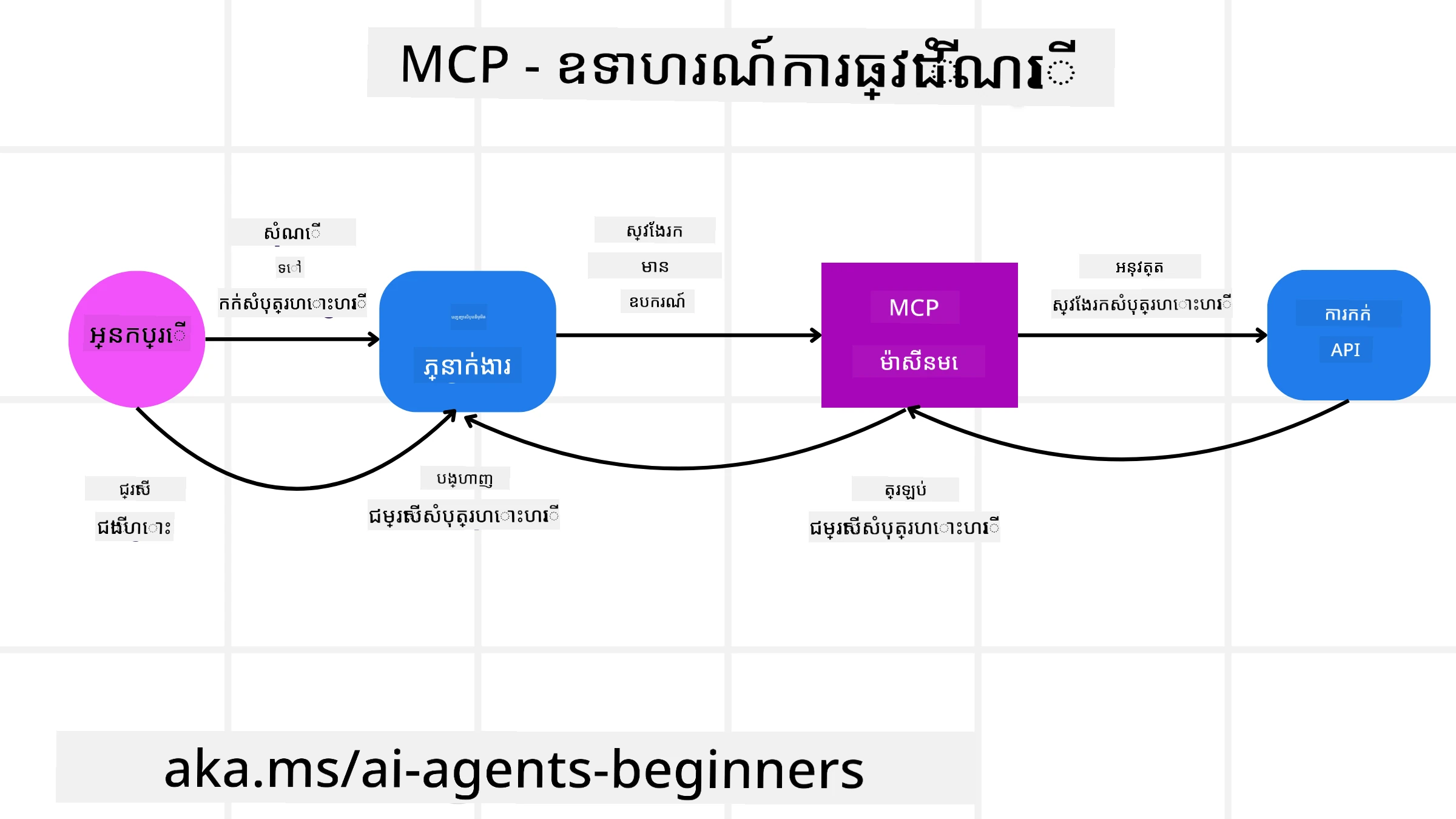
ស្រមៃថាអ្នកប្រើប្រាស់ចង់កក់សំបុត្រយន្តហោះដោយមានជំនួយ AI ដែលមានឥទ្ធិពលដោយ MCP។
-
ការតភ្ជាប់៖ ជំនួយ AI (client MCP) តភ្ជាប់ទៅម៉ាស៊ីនបម្រើ MCP ដែលផ្តល់ដោយក្រុមហ៊ុនយន្តហោះ។
-
ការស្វែងរកឧបករណ៍៖ client សួរម៉ាស៊ីនបម្រើ MCP របស់ក្រុមហ៊ុនយន្តហោះថា “តើអ្នកមានឧបករណ៍អ្វីខ្លះ?” ម៉ាស៊ីនបម្រើឆ្លើយតបជាមួយឧបករណ៍ដូចជា “ស្វែងរកបណ្តាញហោះហើរ” និង “កក់សំបុត្រយន្តហោះ”។
-
ហៅឧបករណ៍៖ អ្នកសុំជំនួយ AI ថា “សូមស្វែងរកសំបុត្រយន្តហោះពីភ្នំពេញទៅហូណូឡ៊ូ។” ជំនួយ AI ប្រើ LLM របស់វា កំណត់ថាវាត្រូវហៅឧបករណ៍ “ស្វែងរកសំបុត្រ” ហើយផ្ញើប៉ារ៉ាដាខ្មែរ (ដើមបំណក, ទិសដៅ) ទៅម៉ាស៊ីនបម្រើ MCP។
-
អនុវត្តន៍ និងឆ្លើយតប៖ ម៉ាស៊ីនបម្រើ MCP ដំណើរការហៅ API កក់សំបុត្រផ្ទៃក្នុងរបស់ក្រុមហ៊ុនយន្តហោះ ស្ដាប់ទិន្នន័យសំបុត្រ (ជាដាតា JSON) ហើយផ្ញើត្រឡប់ទៅជំនួយ AI។
-
អន្តរកម្មបន្ថែម៖ ជំនួយ AI បង្ហាញជម្រើសសំបុត្រ។ ពេលអ្នកជ្រើសរើសសំបុត្រមួយ ជំនួយអាចហៅឧបករណ៍ “កក់សំបុត្រ” នៅម៉ាស៊ីនបម្រើ MCP ដូចគ្នា ដើម្បីបញ្ចប់ការកក់។
ប្រព័ន្ធតំណាងទៅតំណាង (Agent-to-Agent Protocol - A2A)
ខណៈដែល MCP ផ្តោតលើការភ្ជាប់ LLM ទៅឧបករណ៍ ប្រព័ន្ធ Agent-to-Agent (A2A) ធ្វើជាដៃ ទ្វារជំហានមួយ ដោយអនុញ្ញាតឲ្យមានការទំនាក់ទំនង និងសហការរវាងតំណាង AI ផ្សេងគ្នា។ A2A ភ្ជាប់តំណាង AI ពីអង្គភាព បរិយាកាស និងបច្ចេកវិទ្យាផ្សេងគ្នា សម្រាប់បញ្ចប់ភារកិច្ចរួម។
យើងនឹងពិនិត្យគ្រឿងផ្សំនិងអត្ថប្រយោជន៍របស់ A2A និងឧទាហរណ៍ពីរបៀបប្រើប្រាស់វាក្នុងកម្មវិធីធ្វើដំណើររបស់យើង។
គ្រឿងផ្សំស្នូលរបស់ A2A
A2A ផ្តោតលើការអនុញ្ញាតឲ្យមានការប្រាស្រ័យ និងការងារជារួមដើម្បីបញ្ចប់ភារកិច្ចរងមួយរបស់អ្នកប្រើ។ គ្រឿងផ្សំរៀងៗខាងក្រោមរួមចំណែកក្នុងបច្ចេកវិទ្យានេះ៖
កាតតំណាង (Agent Card)
ដូចជាម៉ាស៊ីនបម្រើ MCP ចែករំលែកបញ្ជីឧបករណ៍ កាតតំណាងមាន៖
- ឈ្មោះរបស់តំណាង។
- ការពិពណ៌នាអំពីភារកិច្ចទូទៅដែលវាបញ្ចប់បាន។
- បញ្ជីជំនាញជាក់លាក់ជាមួយការពិពណ៌នាដើម្បីជួយតំណាងផ្សេងទៀត (ឬអ្នកប្រើប្រាស់មនុស្ស) យល់ពីពេលណា និងហេតុអ្វីត្រូវហៅតំណាងនោះ។
- URL Endpoint បច្ចុប្បន្នរបស់តំណាង។
- ជំនាន់ និងសមត្ថភាពរបស់តំណាងដូចជាការផ្ទេរតបនិងការជូនដំណឹងបញ្ចេញ។
អ្នកអនុវត្តតំណាង (Agent Executor)
អ្នកអនុវត្តតំណាងមានភារកិច្ច ផ្ញើបរិបទនៃការផ្សារភាសារបស់អ្នកប្រើទៅអ្នកតំណាងពីចម្ងាយ។ អ្នកតំណាងពីចម្ងាយត្រូវការបរិបទដើម្បីយល់ពីភារកិច្ចដែលត្រូវបញ្ចប់។ នៅម៉ាស៊ីនបម្រើ A2A តំណាងប្រើ Large Language Model (LLM) របស់ខ្លួន ដើម្បីវិភាគសំណើរ និងអនុវត្តភារកិច្ចដោយប្រើឧបករណ៍ផ្ទៃក្នុង។
វត្ថុ (Artifact)
បន្ទាប់ពីអ្នកតំណាងពីចម្ងាយបញ្ចប់ភារកិច្ចដែលបានស្នើ, ផលិតផលនៃការងាររបស់វាត្រូវបានបង្កើតជាវត្ថុមួយ។ វត្ថុ មានលទ្ធផលនៃការងាររបស់តំណាង ការពិពណ៌នាអំពីអ្វីដែលបានបញ្ចប់ និង បរិបទអត្ថបទ ដែលផ្ញើតាមប្រព័ន្ធ។ បន្ទាប់ពីផ្ញើវត្ថុ តំណាងពីចម្ងាយនឹងបិទការតភ្ជាប់រហូតដល់ពេលត្រូវការឡើងវិញ។
ជួរព្រឹត្តិការណ៍ (Event Queue)
គ្រឿងផ្សំនេះប្រើសម្រាប់ ដោះស្រាយកំណែទម្រង់ និងផ្ញើសារ។ វាមានសារៈសំខាន់នៅក្នុងផលិតកម្ម សម្រាប់ប្រព័ន្ធតំណាង ដើម្បីមិនឲ្យការតភ្ជាប់រវាងតំណាងត្រូវបានបិទមុនពេលភារកិច្ចបញ្ចប់ ពិសេសពេលវេលាបញ្ចប់អាចយូរពេក។
អត្ថប្រយោជន៍នៃ A2A
• សហការកាន់តែល្អប្រសើរ៖ វាបានធ្វើឲ្យតំណាងពីអ្នកផ្គត់ផ្គង់និងវេទិកាផ្សេងៗ អាចទំនាក់ទំនង ចែករំលែកបរិបទ និងកសាងការងាររួម ទ្រទ្រង់ការងារឯកត្តាឆ្លងកាត់ប្រព័ន្ធដែលពុំបានភ្ជាប់គ្នា។
• ភាពបត់បែនក្នុងការជ្រើសរើសម៉ូដែល៖ តំណាង A2A សំបូរអាចសម្រេចចិត្តប្រើ LLM ដែលសមស្រប ចំពោះសំណើរខ្លួន, អោយប្រើម៉ូដែលបានបង្កើតឬខ្ពស់បំផុត ដោយខុសពីការតភ្ជាប់ LLM តែមួយក្នុង MCP មួយចំនួន។
• ការផ្ទៀងផ្ទាត់បានរួមបញ្ចូលជាស្រេច៖ ការផ្ទៀងផ្ទាត់ដោយស្ថាប័នត្រូវបានបញ្ចូលដោយផ្ទាល់ក្នុងប្រព័ន្ធ A2A ផ្តល់សន្តិសុខរឹងមាំសម្រាប់ការប្រាស្រ័យរវាងតំណាង។
ឧទាហរណ៍ A2A
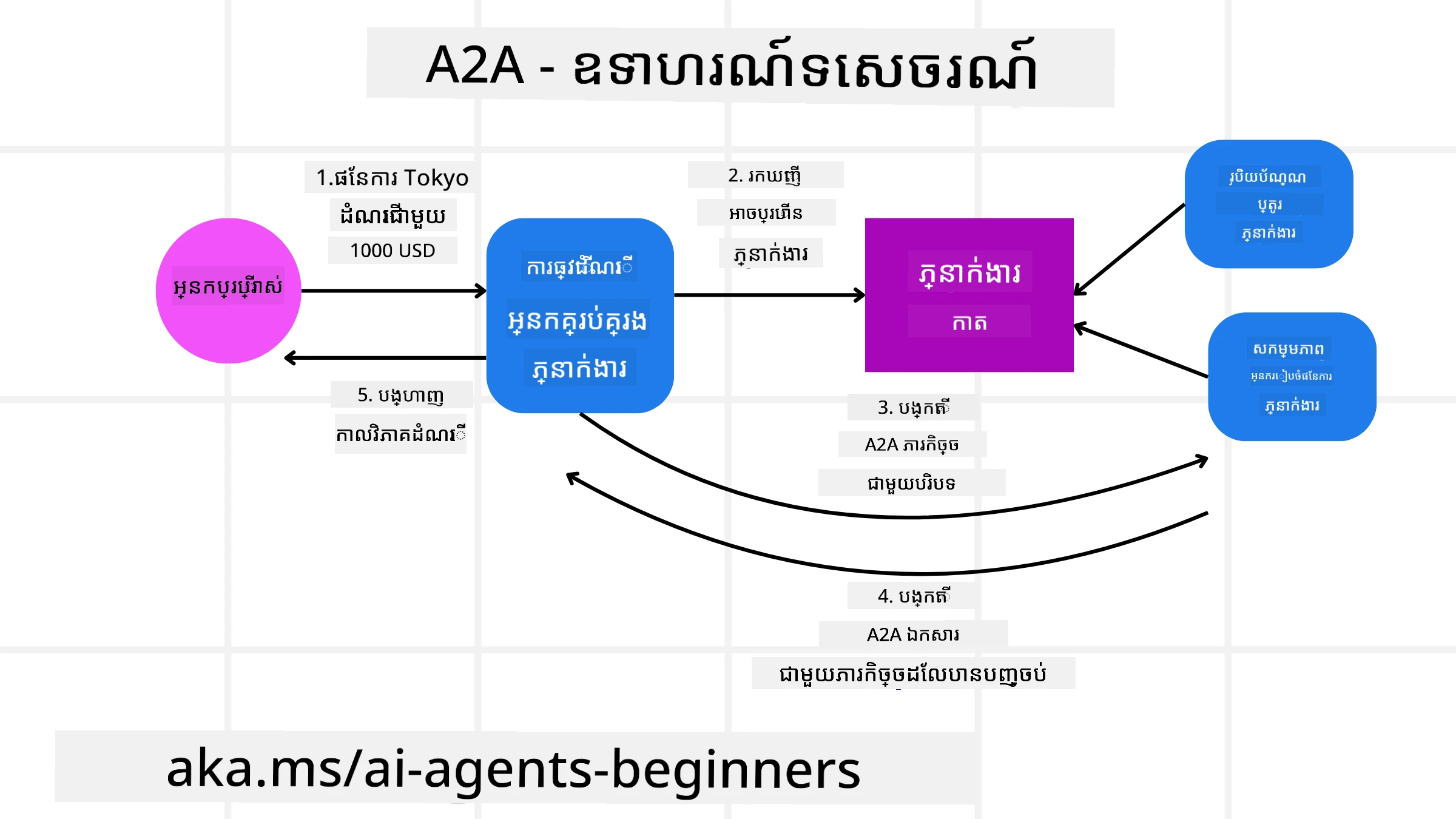
យើងនឹងពង្រីកលើសេណារីយ៉ូចក្លាយការកក់ដំណើររបស់យើង ប៉ុន្តែសំលាប់នេះប្រើប្រព័ន្ធ A2A។
-
សំណើរអ្នកប្រើទៅ Multi-Agent៖ អ្នកប្រើប្រាស់ទំនាក់ទំនងជាមួយ “តំណាងដំណើរ” ជាជំនួយ A2A client/agent ប្រហែលថា “សូមកក់ដំណើរទៅហូណូឡូសម្រាប់សប្តាហ៍ក្រោយ រាប់បញ្ចូលសំបុត្រយន្តហោះ សណ្ឋាគារ និងឡានជួល”។
-
ការតម្រឹមដោយតំណាងដំណើរ៖ តំណាងដំណើរទទួលសំណើរមានភាពស្មុគស្មាញនេះ។ វាប្រើ LLM របស់ខ្លួនធ្វើការវិភាគភារកិច្ច និងកំណត់ថាត្រូវសម្របសម្រួលជាមួយតំណាងជំនាញផ្សេងទៀត។
-
ការប្រាស្រ័យរវាងតំណាង៖ តំណាងដំណើរបន្ទាប់មកប្រើប្រព័ន្ធ A2A ដើម្បីភ្ជាប់ទៅតំណាងចុងក្រោយ ដូចជា “តំណាងក្រុមហ៊ុនយន្តហោះ,” “តំណាងសណ្ឋាគារ,” និង “តំណាងជួលឡាន” ដែលបានបង្កើតដោយក្រុមហ៊ុនផ្សេងៗ។
-
ការអនុវត្តភារកិច្ចដែលផ្តល់បន្ទុក៖ តំណាងដំណើរផ្ញើភារកិច្ចជាក់លាក់ទៅកាន់តំណាងជំនាញទាំងនេះ (ដូចជា “ស្វែងរកសំបុត្រយន្តហោះទៅហូណូឡូ,” “កក់សណ្ឋាគារ,” “ជួលឡាន”) តំណាងជំនាញទាំងនេះ ប្រតិបត្តិការ LLM របស់ខ្លួន និងប្រើឧបករណ៍ផ្ទៃក្នុង (អាចជាម៉ាស៊ីនបម្រើ MCP) ដើម្បីបញ្ចប់ផ្នែកទាំងនេះ។
-
ការឆ្លើយតបរួមបញ្ចូល៖ ពេលដែលតំណាងចុងក្រោយទាំងអស់បញ្ចប់ភារកិច្ច រួមបញ្ចូលព័ត៌មានសំបុត្រ ព័ត៌អត្តសញ្ញាណសណ្ឋាគារ និងបញ្ជាក់ការជួលឡាន តំណាងដំណើរបញ្ចូលព័ត៌មានទាំងនេះ និងផ្ញើតបមត្រាបែបរហស្សនាមកអ្នកប្រើ។
បណ្តាញភាសាធម្មជាតិ (Natural Language Web - NLWeb)
គេហទំព័រតែងតែជាវិធីសម្រាប់អ្នកប្រើប្រាស់ក្នុងការចូលទៅឃើញព័ត៌មាន និងទិន្នន័យជាសំខាន់មួយលើអ៊ីនធឺណិត។
យើងនឹងមើលគ្រឿងផ្សំនានៃ NLWeb អត្ថប្រយោជន៍របស់វា និងឧទាហរណ៍ពីរបៀបដែល NLWeb ប្រតិបត្តិការលើកម្មវិធីធ្វើដំណើររបស់យើង។
គ្រឿងផ្សំនៃ NLWeb
-
កម្មវិធី NLWeb (កូដសេវាកម្មស្នូល)៖ ប្រព័ន្ធដែលដំណើរការសំណួរភាសាធម្មជាតិ។ វាភ្ជាប់ផ្នែកផ្សេងៗនៃវេទិកាដើម្បីបង្កើតចម្លើយ។ អ្នកអាចគិតថាវាជា ម៉ាស៊ីនបង្ហាញមុខងារភាសាធម្មជាតិ សម្រាប់គេហទំព័រមួយ។
-
ប្រព័ន្ធ NLWeb៖ គោលការណ៍ស្នូលមួយសម្រាប់អន្តរកម្មភាសាធម្មជាតិសំរាប់គេហទំព័រ។ វាផ្ញើចម្លើយតាមរចនាសម្ព័ន្ធ JSON (ជាញឹកញាប់ប្រើ Schema.org)។ គោលបំណងរបស់វាគឺបង្កើតមូលដ្ឋានសាមញ្ញសម្រាប់ “បណ្តាញ AI,” ដូចដែល HTML បានធ្វើឲ្យអាចចែករំលែកឯកសារក្នុងអនឡាញ។
-
ម៉ាស៊ីនបម្រើ MCP (ចំណុចបញ្ចប់ប្រព័ន្ធបរិបទម៉ូឌែល)៖ រៀងរាល់ការតម្លើង NLWeb ក៏ដំណើរការជាម៉ាស៊ីនបម្រើ MCP ផងដែរ។ នេះមានន័យថាវាអាច ចែករំលែកឧបករណ៍ (ដូចជា វិធីសាស្ត្រ “ask”) និងទិន្នន័យ ជាមួយប្រព័ន្ធ AI ផ្សេងទៀត។ ក្នុងការអនុវត្តប្រាក់ពិតវាធ្វើឲ្យមាតិកា និងសមត្ថភាពគេហទំព័រអាចប្រើបានសម្រាប់តំណាង AI សម្រាប់ធ្វើឲ្យវាត្រូវបំបែកជាផ្នែកមួយនៃ “បរិយាកាសតំណាង” ទូលំទូលាយ។
-
ម៉ូដែល Embedding៖ ម៉ូដែលទាំងនេះប្រើសម្រាប់ បម្លែងមាតិកាគេហទំព័រឲ្យទៅជាផលិតផលដូចគ្រូពិសេសលេខច្រើនគឺ vectors (embeddings)។ vectors ទាំងនេះចំណុចតំលៃន័យតាមរបៀបកុំព្យូទ័រអាចប្រៀបធៀបនិងស្វែងរក។ វាត្រូវបានផ្សារក្នុងមូលដ្ឋានទិន្នន័យពិសេស ហើយអ្នកប្រើអាចជ្រើសម៉ូដែល embedding ដែលពួកគេចង់ប្រើ។
-
មូលដ្ឋានទិន្នន័យវ៉ិចទ័រ (មេកានីសមើលឡើងវិញ)៖ មូលដ្ឋានទិន្នន័យនេះ រក្សាទុក embedding នៃមាតិកាគេហទំព័រ។ នៅពេលមាននរណាមួយសួរ សំនួរនោះ ផ្ទេរុទ្ធ NLWeb ត្រួតពិនិត្យមូលដ្ឋានទិន្នន័យវ៉ិចទ័រដើម្បីស្វែងរកព័ត៌មានស័ក្តិសមបំផុតយ៉ាងរហ័ស។ វាបញ្ចេញបញ្ជីចម្លើយរហ័ស ដែលបានចាត់តម្លៃតាមសន្ទស្សន៍វាងាយនឹងប្រើប្រាស់។ NLWeb ប្រតិបត្តិការជាមួយប្រព័ន្ធផ្ទុកវ៉ិចទ័រផ្សេងៗ ដូចជា Qdrant, Snowflake, Milvus, Azure AI Search និង Elasticsearch។
ឧទាហរណ៍ NLWeb
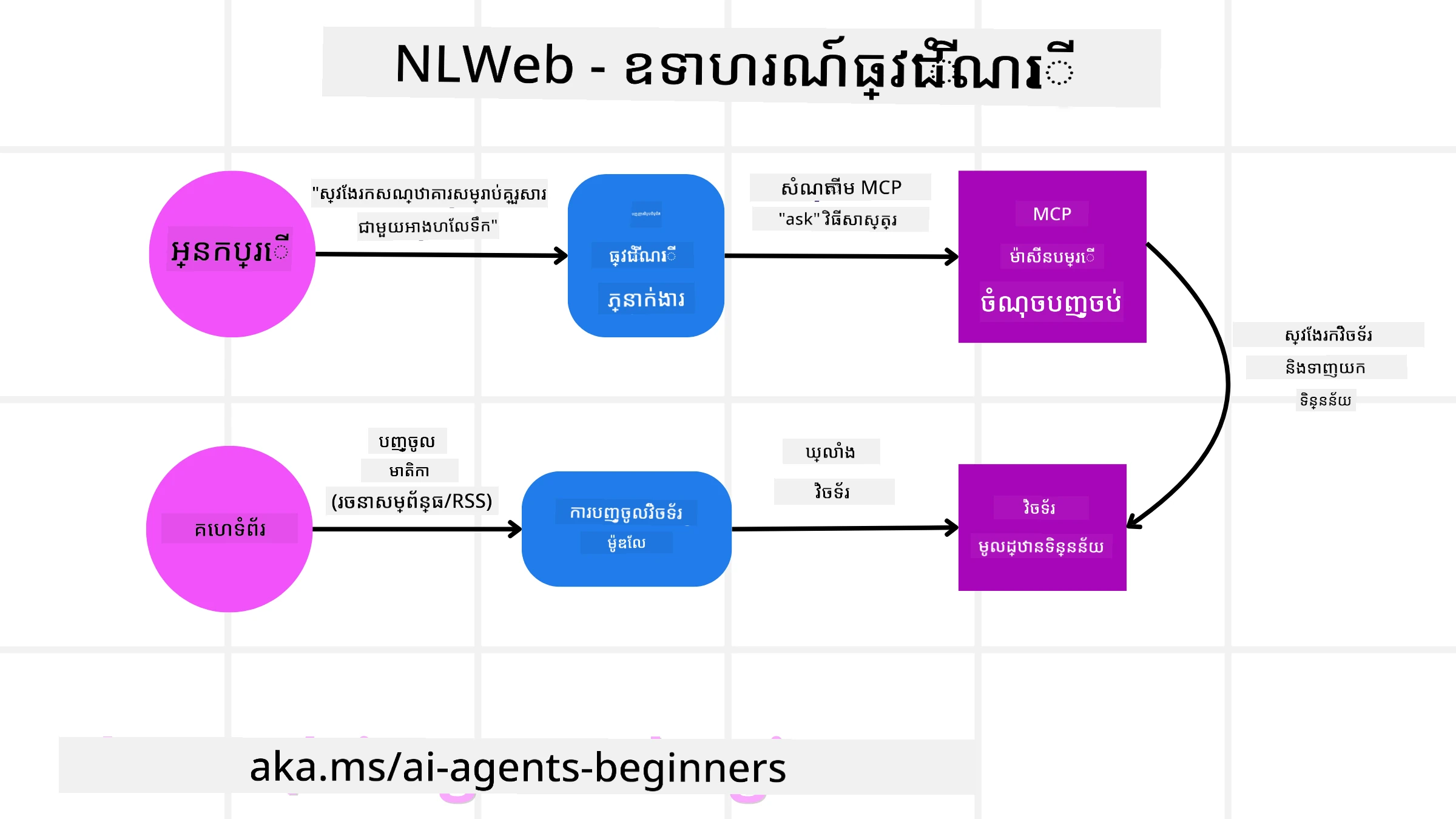
សូមពិនិត្យវិញគេហទំព័រកក់ដំណើរបស់យើង តែពេលនេះ វាដំណើរការដោយ NLWeb។
-
ការចូលទិន្នន័យ៖ បញ្ជីផលិតផលដើមរបស់គេហទំព័រ (ឧ. បញ្ជីយន្តហោះ សណ្ឋាគារពិពណ៌នា កញ្ចប់ទេសចរណ៍) ត្រូវបានធ្វើទ្រង់ទ្រាយជាមួយ Schema.org ឬផ្ទុកតាម RSS feeds។ ឧបករណ៏ NLWeb ចូលទិន្នន័យដែលបានរៀបចំ បង្កើត embeddings ហើយរក្សាទុកថា ក្នុងមូលដ្ឋានទិន្នន័យវ៉ិចទ័រនៅក្នុងឬក្រៅ។
-
សំណួរភាសាធម្មជាតិ (មនុស្ស)៖ អ្នកប្រើប្រាស់ចូលស្វែងរកតាមគេហទំព័រ ហើយមិនត្រូវការរុករកម៉ឺនុយទេ ប៉ុន្តែកំពុងវាយក្នុងចំណុចផ្សារភាសារថា “សូមស្វែងរកសណ្ឋាគារដែលសមស្របសម្រាប់គ្រួសារនៅហូណូឡូ ដែលមានហែលទឹកសម្រាប់សប្តាហ៍ក្រោយ”។
-
វិភាគ NLWeb៖ កម្មវិធី NLWeb ទទួលសំណួរនេះ។ វាបញ្ជូនសំណួរទៅ LLM ដើម្បីយល់ព្រមក៏ស្វែងរកក្នុងមូលដ្ឋានទិន្នន័យវ៉ិចទ័រដើម្បីស្វែងរកបញ្ជីសណ្ឋាគារសមស្រប។
-
លទ្ធផលត្រឹមត្រូវ៖ LLM ជួយបកស្រាយលទ្ធផលស្វែងរក ពិនិត្យសណ្ឋាគារដែលសមស្របដោយផ្អែកលើ “សមស្របសម្រាប់គ្រួសារ,” “ហែលទឹក,” និង “ហូណូឡូ” ហើយបម្លែងជា ចម្លើយភាសាធម្មជាតិ។ ជាអ្វី ដែលសំខាន់ ចម្លើយនេះយោងទៅតាមសណ្ឋាគារពិតពីគេហទំព័រ មិនប្រើព័ត៌មានដែលបង្កើតឡើងដោយខ្លួនឯងឡើយ។
-
អន្តរកម្មតំណាង AI៖ ពីព្រោះ NLWeb សំរាប់ជាម៉ាស៊ីនបម្រើ MCP, តំណាងទេសចរណ៍ AI ខាងក្រៅអាចភ្ជាប់មកកាន់យន្តហោះ NLWeb នេះបាន។ តំណាង AI អាចប្រើវិធីសាស្រ្ត
askរបស់ MCP ដើម្បីសួរគេហទំព័រដោយផ្ទាល់៖ask("តើមានភោជនីយដ្ឋានសមរម្យសម្រាប់វាហើយនៅតំបន់ហូណូឡូ ទទួលស្នើដោយសណ្ឋាគាររឺទេ?")។ NLWeb នឹងដំណើរការសំណួរនេះ ប្រើមូលដ្ឋានទិន្នន័យអំពីភោជនីយដ្ឋាន (បើបានផ្ទុក) ហើយផ្ញើចម្លើយ JSON រៀបចំ។
តើមានសំណួរបន្ថែមអំពី MCP/A2A/NLWeb?
ចូលរួម Microsoft Foundry Discord ដើម្បីជួបជាមួយអ្នករៀនផ្សេងទៀត ចូលរួមក្នុងម៉ោងការិយាល័យ និងទទួលបានចម្លើយពីសំណួរអំពីតំណាង AI របស់អ្នក។
វត្ថុសំរាប់រៀន
មេរៀនមុន
មេរៀនបន្ទាប់
ការបដិសេធ: ឯកសារនេះត្រូវបានបម្លែងភាសា ដោយប្រើសេវាបម្លែងភាសា AI Co-op Translator។ ទោះយើងខ្ញុំមានក្តីប្រាថ្នាឱ្យបានច្បាស់លាស់ តែសូមយល់ដឹងថាការបម្លែងដោយស្វ័យប្រវត្តិក៏អាចមានកំហុសឬភាពមិនត្រឹមត្រូវ។ ឯកសារដើមជាភាសាទីតាំងគួរត្រូវបានគេប្រើជាប្រភពច្បាស់លាស់។ សម្រាប់ព័ត៌មានសំខាន់ៗ សូមណែនាំឱ្យប្រើប្រាស់ការប្រែដោយមនុស្សជំនាញ។ យើងខ្ញុំមិនទទួលខុសត្រូវចំពោះការយល់ច្រឡំ ឬការបកស្រាយខុសបន្ទាប់ពីការប្រើប្រាស់ការបម្លែងនេះនោះទេ។