ai-agents-for-beginners
(Нажмите на изображение выше, чтобы посмотреть видео этого урока)
Паттерн планирования
Введение
This lesson will cover
- Определение чёткой общей цели и разбиение сложной задачи на выполнимые подзадачи.
- Использование структурированного вывода для более надёжных и машинно-читабельных ответов.
- Применение событийно-ориентированного подхода для обработки динамических задач и неожиданных входных данных.
Цели обучения
After completing this lesson, you will have an understanding about:
- Определять и устанавливать общую цель для агента ИИ, обеспечивая, что он ясно знает, чего нужно достичь.
- Разбивать сложную задачу на управляемые подзадачи и организовывать их в логическую последовательность.
- Оснащать агентов подходящими инструментами (например, инструментами поиска или аналитики данных), определять, когда и как они используются, и справляться с возникающими неожиданными ситуациями.
- Оценивать результаты подзадач, измерять производительность и итеративно корректировать действия для улучшения итогового результата.
Определение общей цели и разбиение задачи
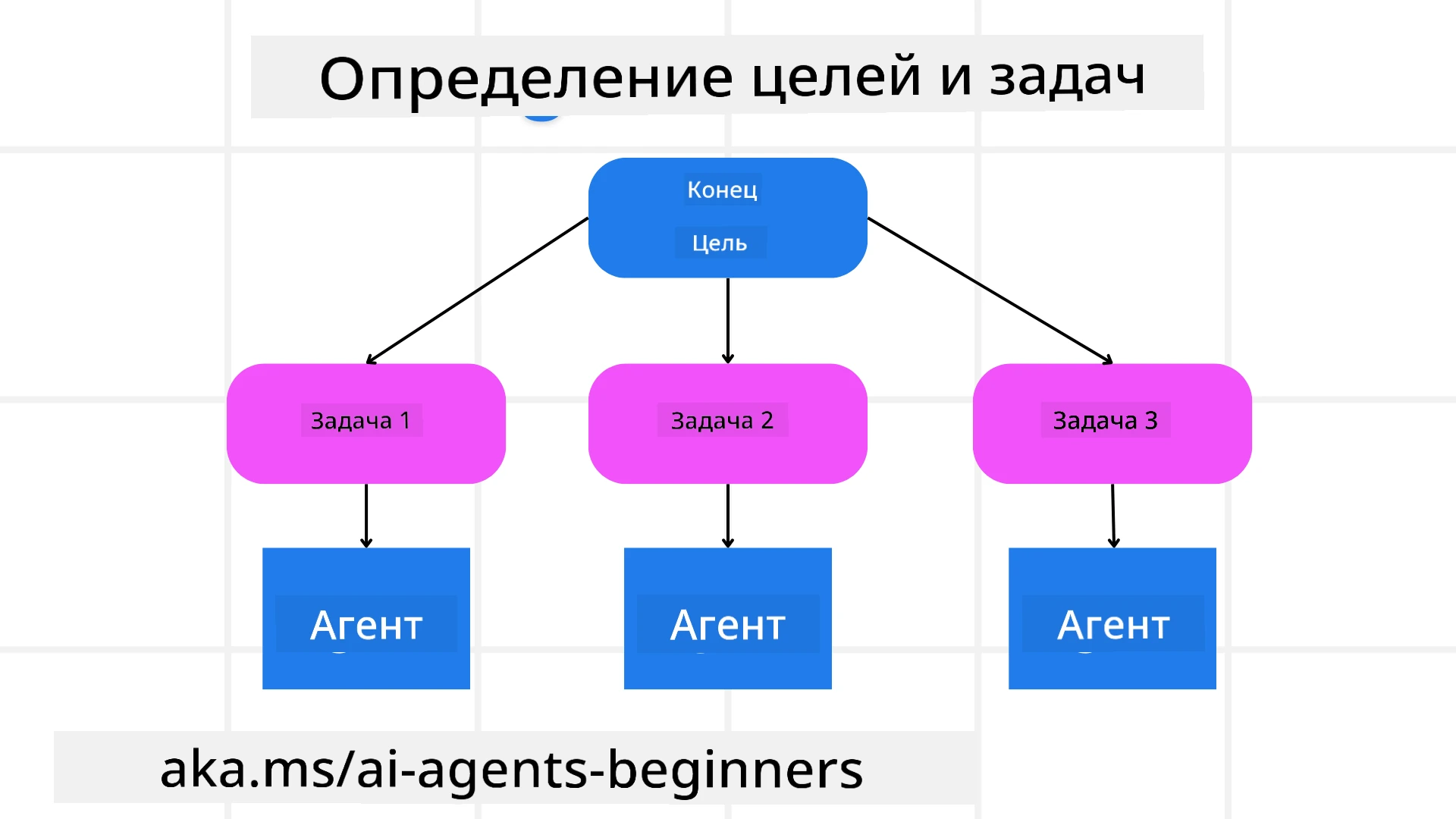
Most real-world tasks are too complex to tackle in a single step. An AI agent needs a concise objective to guide its planning and actions. For example, consider the goal:
"Составить 3-дневный план поездки."
While it is simple to state, it still needs refinement. The clearer the goal, the better the agent (and any human collaborators) can focus on achieving the right outcome, such as creating a comprehensive itinerary with flight options, hotel recommendations, and activity suggestions.
Декомпозиция задачи
Large or intricate tasks become more manageable when split into smaller, goal-oriented subtasks. For the travel itinerary example, you could decompose the goal into:
- Бронирование авиабилетов
- Бронирование отеля
- Аренда автомобиля
- Персонализация
Each subtask can then be tackled by dedicated agents or processes. One agent might specialize in searching for the best flight deals, another focuses on hotel bookings, and so on. A coordinating or “downstream” agent can then compile these results into one cohesive itinerary to the end user.
This modular approach also allows for incremental enhancements. For instance, you could add specialized agents for Food Recommendations or Local Activity Suggestions and refine the itinerary over time.
Структурированный вывод
Large Language Models (LLMs) can generate structured output (e.g. JSON) that is easier for downstream agents or services to parse and process. This is especially useful in a multi-agent context, where we can action these tasks after the planning output is received.
The following Python snippet demonstrates a simple planning agent decomposing a goal into subtasks and generating a structured plan:
from pydantic import BaseModel
from enum import Enum
from typing import List, Optional, Union
import json
import os
from typing import Optional
from pprint import pprint
from agent_framework.azure import AzureAIProjectAgentProvider
from azure.identity import AzureCliCredential

class AgentEnum(str, Enum):
    FlightBooking = "flight_booking"
    HotelBooking = "hotel_booking"
    CarRental = "car_rental"
    ActivitiesBooking = "activities_booking"
    DestinationInfo = "destination_info"
    DefaultAgent = "default_agent"
    GroupChatManager = "group_chat_manager"

# Модель подзадачи путешествия
class TravelSubTask(BaseModel):
    task_details: str
    assigned_agent: AgentEnum  # мы хотим назначить задачу агенту

class TravelPlan(BaseModel):
    main_task: str
    subtasks: List[TravelSubTask]
    is_greeting: bool

provider = AzureAIProjectAgentProvider(credential=AzureCliCredential())

# Определите сообщение пользователя
system_prompt = """You are a planner agent.
    Your job is to decide which agents to run based on the user's request.
    Provide your response in JSON format with the following structure:
{'main_task': 'Plan a family trip from Singapore to Melbourne.',
 'subtasks': [{'assigned_agent': 'flight_booking',
               'task_details': 'Book round-trip flights from Singapore to '
                               'Melbourne.'}
    Below are the available agents specialised in different tasks:
    - FlightBooking: For booking flights and providing flight information
    - HotelBooking: For booking hotels and providing hotel information
    - CarRental: For booking cars and providing car rental information
    - ActivitiesBooking: For booking activities and providing activity information
    - DestinationInfo: For providing information about destinations
    - DefaultAgent: For handling general requests"""

user_message = "Create a travel plan for a family of 2 kids from Singapore to Melbourne"

response = client.create_response(input=user_message, instructions=system_prompt)

response_content = response.output_text
pprint(json.loads(response_content))
Агент планирования с многоагентной оркестрацией
In this example, a Semantic Router Agent receives a user request (e.g., “Мне нужен план отеля для моей поездки.”).
The planner then:
- Receives the Hotel Plan: Планировщик принимает сообщение пользователя и, основываясь на системном подсказке (включая детали доступных агентов), генерирует структурированный план поездки.
- Lists Agents and Their Tools: Реестр агентов содержит список агентов (например, для авиаперелётов, отелей, аренды автомобилей и мероприятий) вместе с функциями или инструментами, которые они предоставляют.
- Routes the Plan to the Respective Agents: В зависимости от количества подзадач планировщик либо отправляет сообщение напрямую выделенному агенту (в сценариях с одной задачей), либо координирует через менеджера группового чата для совместной работы нескольких агентов.
- Summarizes the Outcome: Наконец, планировщик суммирует сгенерированный план для ясности. The following Python code sample illustrates these steps:
from pydantic import BaseModel

from enum import Enum
from typing import List, Optional, Union

class AgentEnum(str, Enum):
    FlightBooking = "flight_booking"
    HotelBooking = "hotel_booking"
    CarRental = "car_rental"
    ActivitiesBooking = "activities_booking"
    DestinationInfo = "destination_info"
    DefaultAgent = "default_agent"
    GroupChatManager = "group_chat_manager"

# Модель подзадачи путешествия

class TravelSubTask(BaseModel):
    task_details: str
    assigned_agent: AgentEnum # мы хотим назначить задачу агенту

class TravelPlan(BaseModel):
    main_task: str
    subtasks: List[TravelSubTask]
    is_greeting: bool
import json
import os
from typing import Optional

from agent_framework.azure import AzureAIProjectAgentProvider
from azure.identity import AzureCliCredential

# Создать клиента

provider = AzureAIProjectAgentProvider(credential=AzureCliCredential())

from pprint import pprint

# Определить сообщение пользователя

system_prompt = """You are a planner agent.
    Your job is to decide which agents to run based on the user's request.
    Below are the available agents specialized in different tasks:
    - FlightBooking: For booking flights and providing flight information
    - HotelBooking: For booking hotels and providing hotel information
    - CarRental: For booking cars and providing car rental information
    - ActivitiesBooking: For booking activities and providing activity information
    - DestinationInfo: For providing information about destinations
    - DefaultAgent: For handling general requests"""

user_message = "Create a travel plan for a family of 2 kids from Singapore to Melbourne"

response = client.create_response(input=user_message, instructions=system_prompt)

response_content = response.output_text

# Вывести содержимое ответа после загрузки его в формате JSON

pprint(json.loads(response_content))
What follows is the output from the previous code and you can then use this structured output to route to assigned_agent and summarize the travel plan to the end user.
{
    "is_greeting": "False",
    "main_task": "Plan a family trip from Singapore to Melbourne.",
    "subtasks": [
        {
            "assigned_agent": "flight_booking",
            "task_details": "Book round-trip flights from Singapore to Melbourne."
        },
        {
            "assigned_agent": "hotel_booking",
            "task_details": "Find family-friendly hotels in Melbourne."
        },
        {
            "assigned_agent": "car_rental",
            "task_details": "Arrange a car rental suitable for a family of four in Melbourne."
        },
        {
            "assigned_agent": "activities_booking",
            "task_details": "List family-friendly activities in Melbourne."
        },
        {
            "assigned_agent": "destination_info",
            "task_details": "Provide information about Melbourne as a travel destination."
        }
    ]
}
An example notebook with the previous code sample is available здесь.
Итеративное планирование
Some tasks require a back-and-forth or re-planning, where the outcome of one subtask influences the next. For example, if the agent discovers an unexpected data format while booking flights, it might need to adapt its strategy before moving on to hotel bookings.
Additionally, user feedback (e.g. a human deciding they prefer an earlier flight) can trigger a partial re-plan. This dynamic, iterative approach ensures that the final solution aligns with real-world constraints and evolving user preferences.
e.g sample code
from agent_framework.azure import AzureAIProjectAgentProvider
from azure.identity import AzureCliCredential
#.. то же, что и в предыдущем коде, и передать историю пользователя и текущий план

system_prompt = """You are a planner agent to optimize the
    Your job is to decide which agents to run based on the user's request.
    Below are the available agents specialized in different tasks:
    - FlightBooking: For booking flights and providing flight information
    - HotelBooking: For booking hotels and providing hotel information
    - CarRental: For booking cars and providing car rental information
    - ActivitiesBooking: For booking activities and providing activity information
    - DestinationInfo: For providing information about destinations
    - DefaultAgent: For handling general requests"""

user_message = "Create a travel plan for a family of 2 kids from Singapore to Melbourne"

response = client.create_response(
    input=user_message,
    instructions=system_prompt,
    context=f"Previous travel plan - {TravelPlan}",
)
# .. перепланировать и отправить задачи соответствующим агентам
For more comprehensive planning do checkout Magnetic One Статья в блоге for solving complex tasks.
Резюме
In this article we have looked at an example of how we can create a planner that can dynamically select the available agents defined. The output of the Planner decomposes the tasks and assigns the agents so they can be executed. It is assumed the agents have access to the functions/tools that are required to perform the task. In addition to the agents you can include other patterns like reflection, summarizer, and round robin chat to further customize.
Дополнительные ресурсы
Magentic One - A Generalist multi-agent system for solving complex tasks and has achieved impressive results on multiple challenging agentic benchmarks. Reference: Magentic One. In this implementation the orchestrator creates task specific plans and delegates these tasks to the available agents. In addition to planning the orchestrator also employs a tracking mechanism to monitor the progress of the task and re-plans as required.
Остались вопросы о паттерне проектирования планирования?
Join the Microsoft Foundry Discord to meet with other learners, attend office hours and get your AI Agents questions answered.
Предыдущий урок
Следующий урок
Паттерн проектирования многоагентной системы
Отказ от ответственности: Этот документ был переведён с помощью сервиса машинного перевода на основе ИИ Co-op Translator (https://github.com/Azure/co-op-translator). Хотя мы стремимся к точности, имейте в виду, что автоматические переводы могут содержать ошибки или неточности. Оригинальный документ на исходном языке следует считать авторитетным источником. Для критически важной информации рекомендуется профессиональный перевод, выполненный человеком. Мы не несем ответственности за любые недоразумения или неверные толкования, возникшие в результате использования данного перевода.