ai-agents-for-beginners
探索 Microsoft Agent Framework
介紹
本課程將涵蓋:
- 理解 Microsoft Agent Framework:主要特點與價值
- 探索 Microsoft Agent Framework 的核心概念
- 高級 MAF 模式:工作流、中介軟件與記憶體
學習目標
完成本課程後,您將能夠:
- 使用 Microsoft Agent Framework 建構生產就緒的 AI 代理
- 將 Microsoft Agent Framework 的核心功能應用於您的代理用例
- 使用包括工作流、中介軟件和可觀察性在內的高級模式
程式碼範例
Microsoft Agent Framework (MAF) 的程式碼範例可在本儲存庫中 xx-python-agent-framework 和 xx-dotnet-agent-framework 檔案下找到。
理解 Microsoft Agent Framework
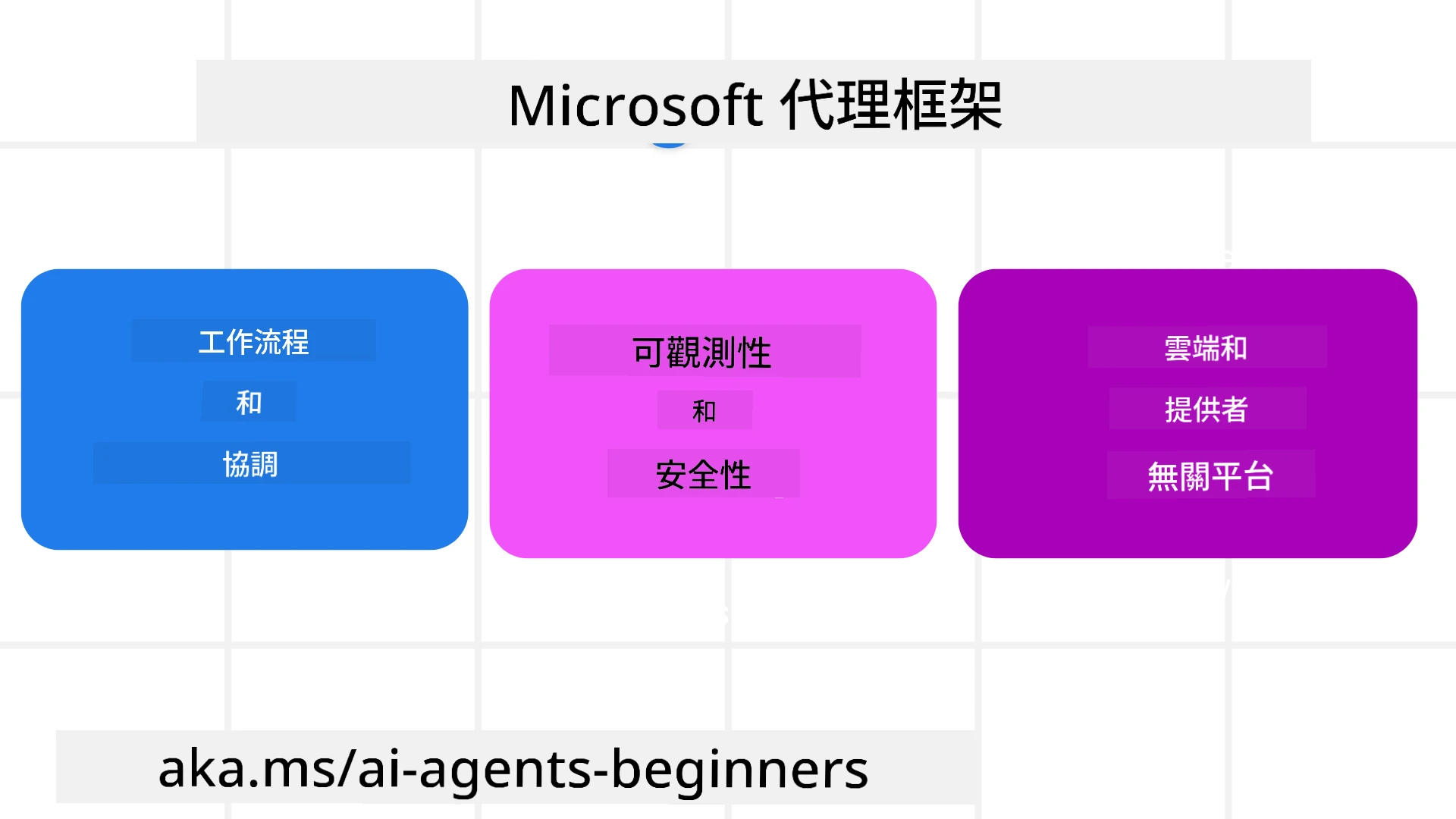
Microsoft Agent Framework (MAF) 是微軟統一的 AI 代理架構。它靈活地應對了生產及研究環境中看到的各種代理用例,包括:
- 序列代理編排,適用於需要逐步工作流程的場景。
- 並行編排,適用於代理需同時完成任務的場景。
- 群組聊天編排,適用於代理在同一任務上協同工作的場景。
- 任務交接編排,適用於代理在完成子任務後相互交接任務的場景。
- 磁性編排,用於管理代理建立及修改任務清單,並協調子代理完成任務。
為了在生產中提供 AI 代理,MAF 也包含以下功能:
- 可觀察性,透過 OpenTelemetry,監控 AI 代理的每一個動作,包括工具調用、編排步驟、推理流程及透過 Microsoft Foundry 儀表板進行效能監控。
- 安全性,代理直接託管於 Microsoft Foundry,包含角色存取、私有資料處理及內建內容安全的安全控管。
- 耐久性,代理線程和工作流程可暫停、恢復並從錯誤中復原,支持長時間運行的流程。
- 控制性,支持人類介入的工作流程,其中任務標記為需人類審核。
Microsoft Agent Framework 亦著眼於可互操作性:
- 跨雲中立性 — 代理可運行於容器內、本地端及多個不同雲端環境。
- 供應商中立性 — 可透過您喜愛的 SDK 建立代理,包括 Azure OpenAI 和 OpenAI。
- 整合開放標準 — 代理可利用如 Agent-to-Agent (A2A) 以及模型上下文協定 (MCP) 來發現和使用其他代理與工具。
- 外掛及連接器 — 可連接至 Microsoft Fabric、SharePoint、Pinecone 及 Qdrant 等資料及記憶服務。
接著看看這些功能如何應用於 Microsoft Agent Framework 的一些核心概念。
Microsoft Agent Framework 的核心概念
代理(Agents)
建立代理
代理建立是通過定義推理服務(LLM 提供者)、代理須遵循的一組指令,以及指派的 name:
agent = AzureOpenAIChatClient(credential=AzureCliCredential()).create_agent( instructions="You are good at recommending trips to customers based on their preferences.", name="TripRecommender" )
上述範例使用了 Azure OpenAI,代理也可以使用各種服務建立,包括 Microsoft Foundry Agent Service:
AzureAIAgentClient(async_credential=credential).create_agent( name="HelperAgent", instructions="You are a helpful assistant." ) as agent
OpenAI 的 Responses、ChatCompletion API
agent = OpenAIResponsesClient().create_agent( name="WeatherBot", instructions="You are a helpful weather assistant.", )
agent = OpenAIChatClient().create_agent( name="HelpfulAssistant", instructions="You are a helpful assistant.", )
或是使用 A2A 協定的遠端代理:
agent = A2AAgent( name=agent_card.name, description=agent_card.description, agent_card=agent_card, url="https://your-a2a-agent-host" )
執行代理
代理可透過 .run 或 .run_stream 方法執行,分別對應非串流或串流回應。
result = await agent.run("What are good places to visit in Amsterdam?")
print(result.text)
async for update in agent.run_stream("What are the good places to visit in Amsterdam?"):
    if update.text:
        print(update.text, end="", flush=True)
每次代理執行也可帶有自定義選項,如代理可用的 max_tokens、tools,甚至是代理使用的 model。
這在需要特定模型或工具來完成用戶任務時很有用。
工具
工具可在定義代理時設置:
def get_attractions( location: Annotated[str, Field(description="The location to get the top tourist attractions for")], ) -> str: """Get the top tourist attractions for a given location.""" return f"The top attractions for {location} are."


# 當直接創建一個 ChatAgent 時

agent = ChatAgent( chat_client=OpenAIChatClient(), instructions="You are a helpful assistant", tools=[get_attractions]
也可在執行代理時指定:
result1 = await agent.run( "What's the best place to visit in Seattle?", tools=[get_attractions] # 僅提供此運行使用的工具 )
代理線程
代理線程用來處理多輪對話。線程可由以下兩種方式建立:
- 使用
get_new_thread()來啟動線程,可持續儲存使用 - 在執行代理時自動建立線程,且該線程只在當次執行期間存在。
建立線程的程式碼如下:
# 建立一個新執行緒。
thread = agent.get_new_thread() # 使用該執行緒執行代理程式。
response = await agent.run("Hello, I am here to help you book travel. Where would you like to go?", thread=thread)
然後可以將線程序列化,以便後續儲存使用:
# 建立一個新執行緒。
thread = agent.get_new_thread()

# 使用該執行緒運行代理。

response = await agent.run("Hello, how are you?", thread=thread)

# 將執行緒序列化以供存儲。

serialized_thread = await thread.serialize()

# 從存儲加載後反序列化執行緒狀態。

resumed_thread = await agent.deserialize_thread(serialized_thread)
代理中介軟件
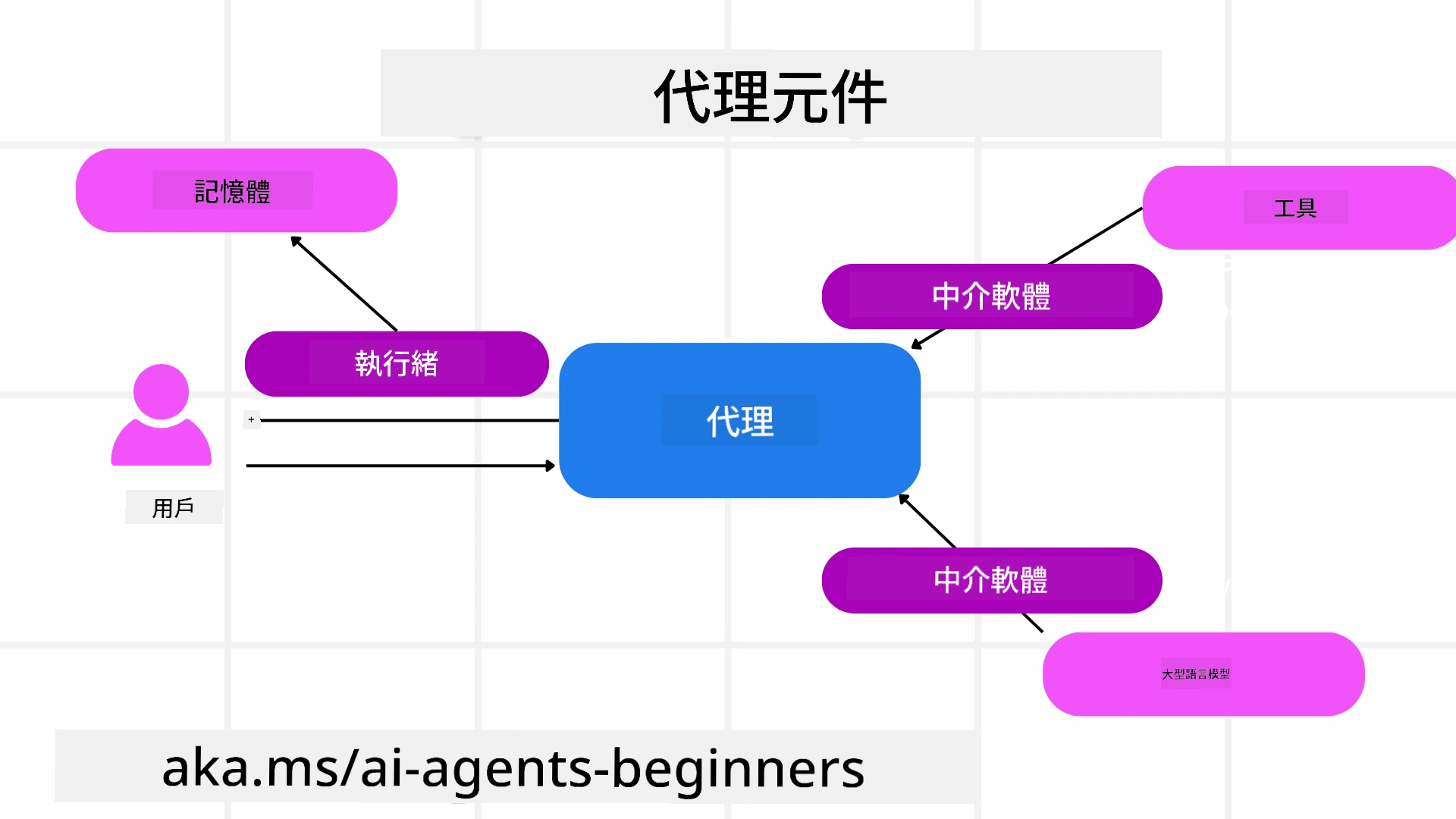
代理會與工具和大型語言模型 (LLM) 互動以完成用戶任務。在某些情況下,我們希望在此互動過程中執行或追蹤行為。代理中介軟件允許我們這樣做,包含:
函式中介軟件
此中介軟件允許我們在代理和其調用的函式/工具間執行動作。舉例而言,您可能想在函式調用時做些記錄。
下方程式碼中,next 決定是否呼叫下一個中介軟件或真正的函式。
async def logging_function_middleware(
    context: FunctionInvocationContext,
    next: Callable[[FunctionInvocationContext], Awaitable[None]],
) -> None:
    """Function middleware that logs function execution."""
    # 預處理:函數執行前記錄日誌
    print(f"[Function] Calling {context.function.name}")

    # 繼續下一個中介軟件或函數執行
    await next(context)

    # 後處理:函數執行後記錄日誌
    print(f"[Function] {context.function.name} completed")
聊天中介軟件
此中介軟件使我們能在代理與 LLM 之間的請求過程中執行或記錄動作。
其中包含如發送至 AI 服務的 messages 等重要資訊。
async def logging_chat_middleware(
    context: ChatContext,
    next: Callable[[ChatContext], Awaitable[None]],
) -> None:
    """Chat middleware that logs AI interactions."""
    # 預處理:在 AI 呼叫之前記錄日志
    print(f"[Chat] Sending {len(context.messages)} messages to AI")

    # 繼續至下一個中介軟件或 AI 服務
    await next(context)

    # 後處理:在 AI 響應後記錄日志
    print("[Chat] AI response received")
代理記憶
如同在 Agentic Memory 課程中所提,記憶對於允許代理在不同上下文中運作至關重要。MAF 提供多種記憶類型:
記憶體中儲存
此為應用程序執行期間存於線程中的記憶體。
# 建立一個新執行緒。
thread = agent.get_new_thread() # 使用該執行緒運行代理。
response = await agent.run("Hello, I am here to help you book travel. Where would you like to go?", thread=thread)
永久性訊息
此記憶用於跨會話保存對話歷史。可利用 chat_message_store_factory 定義:
from agent_framework import ChatMessageStore

# 建立一個自訂訊息儲存庫
def create_message_store():
    return ChatMessageStore()

agent = ChatAgent(
    chat_client=OpenAIChatClient(),
    instructions="You are a Travel assistant.",
    chat_message_store_factory=create_message_store
)
動態記憶
此記憶會在代理執行前加入上下文,這些記憶可儲存在外部服務,如 mem0:
from agent_framework.mem0 import Mem0Provider

# 使用 Mem0 作為進階記憶體功能
memory_provider = Mem0Provider(
    api_key="your-mem0-api-key",
    user_id="user_123",
    application_id="my_app"
)

agent = ChatAgent(
    chat_client=OpenAIChatClient(),
    instructions="You are a helpful assistant with memory.",
    context_providers=memory_provider
)
代理可觀察性
可觀察性對建構可靠且可維護的代理系統十分重要。MAF 整合 OpenTelemetry,提供追蹤與儀表,增強可觀察性。
from agent_framework.observability import get_tracer, get_meter

tracer = get_tracer()
meter = get_meter()
with tracer.start_as_current_span("my_custom_span"):
    # 做某事
    pass
counter = meter.create_counter("my_custom_counter")
counter.add(1, {"key": "value"})
工作流
MAF 提供工作流,這是為完成任務預定義的步驟,且工作流包含 AI 代理作為其中組件。
工作流由不同組件構成,以提升流程控制。工作流亦支持多代理編排與檢查點存取以保存工作流狀態。
工作流的核心組件是:
執行者
執行者接收輸入訊息,執行其分派任務,然後產生輸出訊息。此過程推進工作流朝向任務完成。執行者可以是 AI 代理或自訂邏輯。
連結(Edges)
連結用於定義工作流中訊息的流向,可包括:
直接連結 — 執行者之間的簡單一對一連接:
from agent_framework import WorkflowBuilder

builder = WorkflowBuilder()
builder.add_edge(source_executor, target_executor)
builder.set_start_executor(source_executor)
workflow = builder.build()
條件連結 — 當條件達成時觸發。例如:當旅館房間無法提供時,執行者可建議其他選項。
分支條件連結 — 根據定義的條件將訊息路由至不同執行者。例如:旅客若有優先權,其任務將透過另一工作流程處理。
分散連結 — 將一則訊息發送至多個目標。
彙集連結 — 從多個執行者收集多則訊息,並發送至一個目標。
事件
為了提供更好的工作流可觀察性,MAF 提供內建執行事件,包括:
WorkflowStartedEvent- 工作流執行開始WorkflowOutputEvent- 工作流產生輸出WorkflowErrorEvent- 工作流遭遇錯誤ExecutorInvokeEvent- 執行者開始處理ExecutorCompleteEvent- 執行者完成處理RequestInfoEvent- 發出請求
進階 MAF 模式
以上章節涵蓋了 Microsoft Agent Framework 的核心概念。當您建立更複雜的代理時,可考慮以下高級模式:
- 中介軟件組合:鏈結多個中介軟件處理器(如記錄、驗證、流量限制),使用函式和聊天中介軟件實現對代理行為的細粒度控制。
- 工作流檢查點:使用工作流事件與序列化功能保存與恢復長時間執行的代理流程。
- 動態工具選擇:結合對工具描述的檢索增強生成 (RAG) 與 MAF 的工具登錄,根據查詢僅呈現相關工具。
- 多代理交接:使用工作流邊界和條件路由實現專業代理之間的任務交接編排。
程式碼範例
Microsoft Agent Framework 的程式碼範例可於本儲存庫中 xx-python-agent-framework 與 xx-dotnet-agent-framework 檔案找到。
還有關於 Microsoft Agent Framework 的疑問嗎?
加入 Microsoft Foundry Discord,與其他學習者交流,參加辦公時間,並獲取關於 AI 代理的疑問解答。
免責聲明:
本文件係使用 AI 翻譯服務 Co-op Translator 進行翻譯。雖然我們致力於確保準確性,但請注意,自動翻譯可能包含錯誤或不準確之處。原文文件之原語版本應視為權威來源。如涉及重要資訊,建議採用專業人類翻譯。我們不對因使用本翻譯所引致之任何誤解或誤釋承擔責任。