What if a model predicts a biological state we weren't looking for?
Pancreatic cancer cells can behave differently even within the same tumor. Researchers describe two well-studied states as classical and basal-like. Patients with classical-subtype tumors are generally more sensitive to standard chemotherapy but often eventually experience resistance to treatment. However, basal-like cells may be more vulnerable to KRAS inhibitors, an emerging class of drugs designed to block the mutated KRAS protein that drives most pancreatic cancers. Unfortunately, classical cells are more likely to survive these same drugs. That state-specific response raises a research question: could compounds move classical cells toward the KRAS-inhibitor-sensitive basal state?
In Project Ex Vivo, a joint cancer research collaboration between Microsoft and the Broad Institute, we investigated that question with Quine. We used the model to evaluate thousands of compounds and identify candidates that might move cells from the classical state toward the basal-like state. Quine also predicted that some compounds would move cells away from both known states toward a distinct third state we hadn't been looking for.
We selected a shortlist that included compounds predicted to produce the intended shift, the reverse shift, and the unexpected third-state change, then tested them in the laboratory.
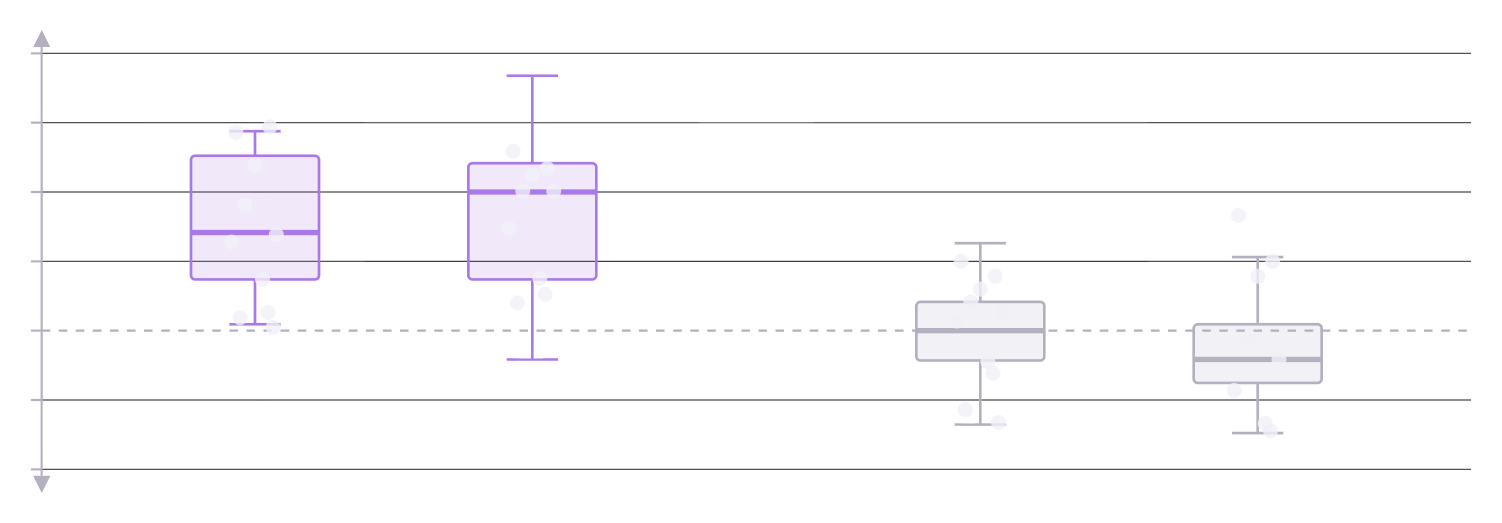
The laboratory results supported different parts of the model's predictions with different strengths. Reverse shifts toward the classical state were weaker, as the model predicted. A few compounds even moved cells toward the distinct third state.
Importantly, Quine's two highest-ranked compounds for shifting cells toward the basal-like state produced the largest shifts in the desired direction, while the two comparison compounds selected by our collaborators produced little measurable shift in this assay.
619Drug
6985Drug
64Drug
5634
In this experiment, the compounds selected by Quine moved cells toward the basal-like state more than those selected by our collaborators. More experiments are needed to know whether that holds more broadly.
The unexpected third state also raised new questions: what does this state represent biologically, and why did those compounds move cells toward it?
How can a world model guide experimental planning?
A world model begins with a representation of what matters about a system at a given moment (i.e., its state, in the general modeling sense rather than the biological sense of a cell state). It then uses learned dynamics to predict how that state might change. Each predicted state can become the starting point for the next prediction, producing a rollout of one possible future.
Biology makes that difficult. No single instrument reveals the complete state of a living system. We infer it from partial observations, including which genes are active, which proteins are present, how individual cells respond, and how a tissue is organized. As we move toward a world model of biology, Quine is learning shared representations across those biological scales and modalities. Its surrounding harness connects the model with scientific literature, data, software, laboratory tools, and the researchers using them.
Starting from what we've observed, the model can simulate how the system might respond to different actions, such as applying a drug compound. We can compare those predictions with our goal, reducing a vast experimental search space to a smaller set of promising interventions.
Reducing the experimental search space is especially valuable in biology, where testing an idea takes time. Cells take time to grow, molecules take time to synthesize, and patient-derived cultures can take days or weeks. Computation can examine far more possibilities than researchers can test directly.
In the recorded talk, Nicolò calls this trading computation for experimentation, or using computation to choose experiments more carefully rather than eliminating experiments altogether.
This pancreatic cancer research offers a glimpse of what moving toward a world model could add. Rather than ranking compounds only against a fixed classical-or-basal choice, we used Quine to represent a broader landscape of possible cell states. That broader representation surfaced a third state we hadn't set out to test. The unexpected results opened a new line of inquiry into what that state represents and how it arises.