
Chapter 2 of 6
Architecture at a glance#
The agent already exists and keeps running where it is. The team picks the Agent 365 integration that matches the runtime, records the decisions, and then reads the live record.
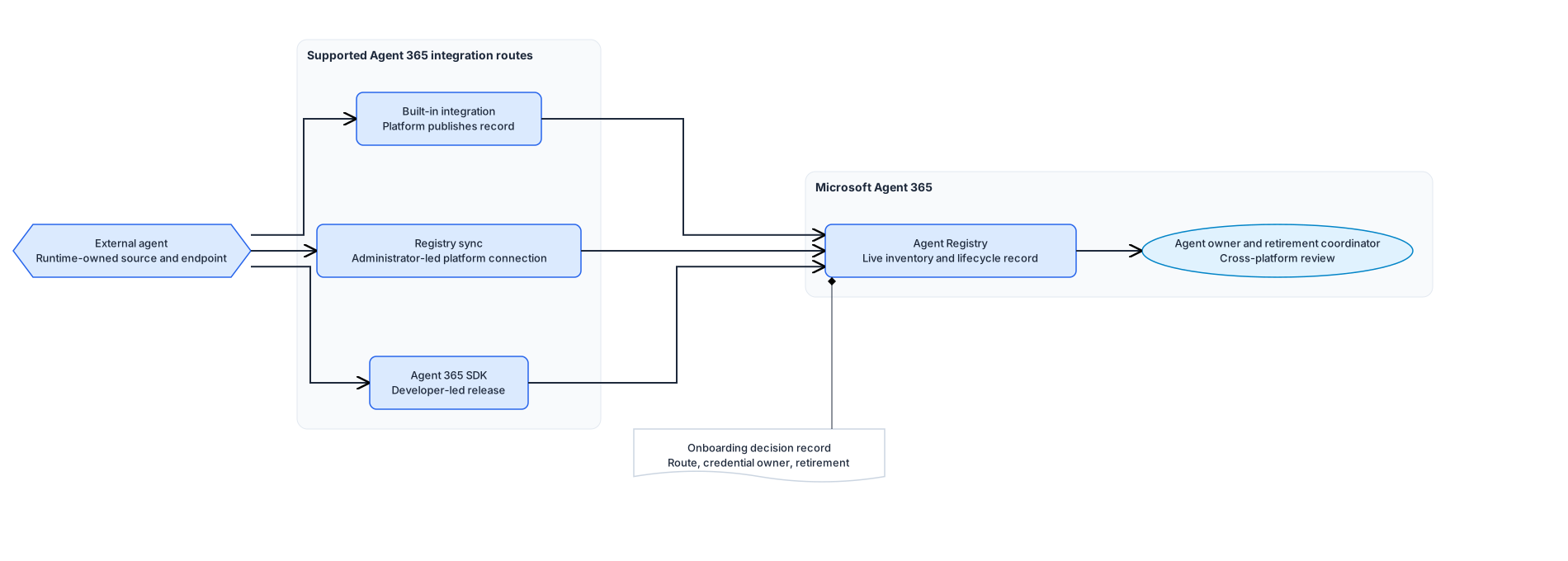
Registry sync is administrator-led: the Agent 365 administrator connects the external platform in the Microsoft 365 admin center and runs the sync. The SDK route is developer-led: the runtime owner adds the integration in code and releases it. Built-in integration covers agents whose platform is already integrated with Agent 365, where an administrator may still need to enable them.
onboarding-decision.json holds what the registry does not: which route was chosen, who owns the credential behind a platform connection, and how the agent gets retired across both systems.
Design choices and tradeoffs#
| Decision | Chosen approach | Benefit | Limit |
|---|---|---|---|
| Enterprise inventory | Agent 365 Agent Registry | One live record for inventory and lifecycle | The record only arrives through a supported route |
| Route preference | Try built-in and Registry sync before the SDK | No code change when a platform path already covers the need | Registry sync is in preview and its platform list changes |
| Credential handling | Record the issuer, scope, store, and revocation path; keep the secret in the platform's own store | The connection has a named owner who can revoke it | The record is only as good as the review behind it |
| Retirement | One coordinator and one cross-platform plan | Removing the agent covers both the runtime and the registry | Retirement stays a human process across two organizations |
Architecture guidance#
Use Connect existing agents to Microsoft Agent 365 to see which onboarding paths apply to agents built outside the Microsoft ecosystem.
Use Choose an Agent 365 integration option to decide between built-in integration, Registry sync, and the Agent 365 SDK.
Use Connected platforms in the Microsoft 365 agent registry for the supported platforms, the connection flow, and the credentials and permissions each platform requires.