Chapter 2 of 6
Architecture at a glance#
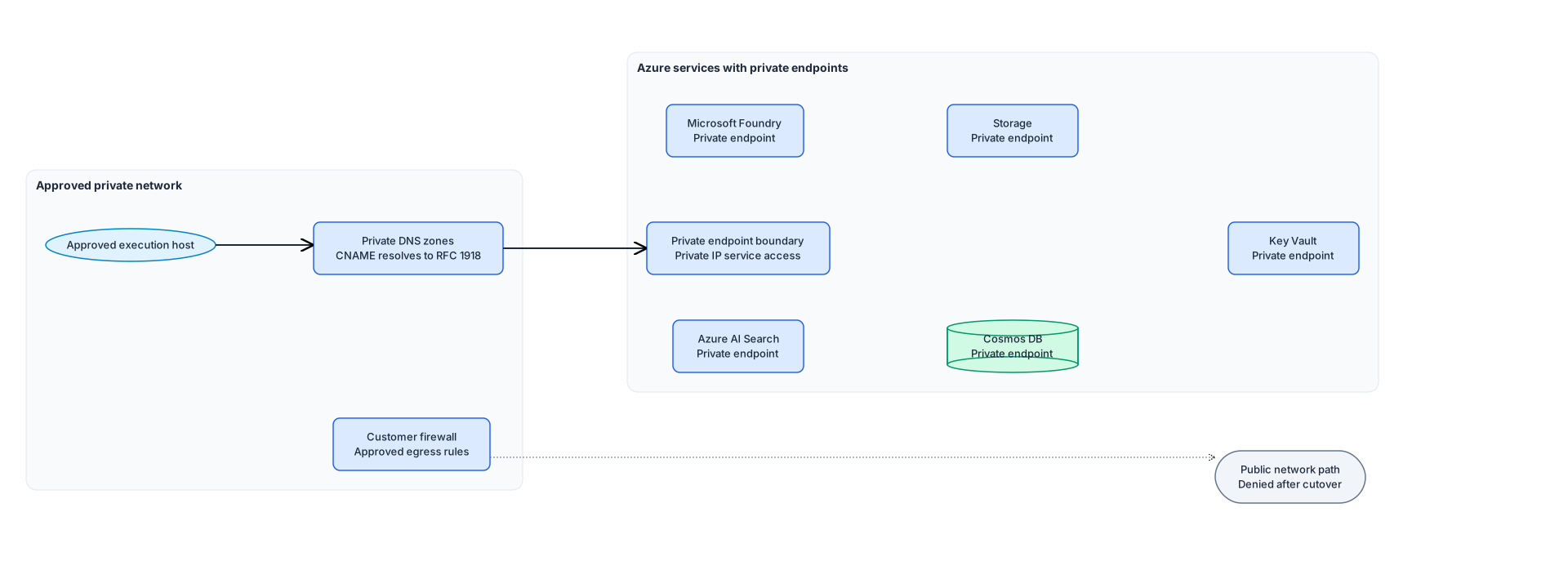
Applications keep using normal service FQDNs. Inside the approved network, DNS follows the CNAME chain into a linked private DNS zone and returns the private endpoint's RFC 1918 address. The client then connects on TCP 443.
The delegated Agent Service subnet has a separate default route to the customer firewall. Azure holds the route; firewall administrators maintain the rules. A route does not prove that the firewall permits traffic.
Corporate or on-premises identity providers may authenticate users before traffic reaches Azure API Management. They do not replace Microsoft Entra workload identity for agents and Azure services. The network owner must keep the user-authentication path separate from the private service and agent-token paths.
Design choices and tradeoffs#
| Decision | Chosen approach | Tradeoff |
|---|---|---|
| Network foundation | Consume the approved VNet and subnet resource IDs | Microsoft-managed networking needs a different delivery path |
| Foundry account | Use an account created with the approved delegated subnet | An incompatible account needs approved migration or replacement |
| DNS ownership | Reuse authoritative central zones or deploy approved local zones | Central and hybrid designs need forwarding and Bicep changes |
| Agent egress | Keep the dedicated subnet route to the customer firewall | The governed-agent deployment must still test firewall rules and runtime traffic |